NARRATIVES OF HEALTH AND ILLNESS

la_laguna-tenerife_3Stories Matter; Story Matters

in health and illness

At the centre of the teaching of Narrative Medicine in medical schools (originally in the US but increasingly across the world) is the need for health professionals to understand relationships of caring as well as curing; to develop skills of attentive listening as well as diagnosing.

At the centre of the International Conference on Narrative of Health and Illness (http://www.healthnarratives.org/; see http://www.artsandhumanities.org/conferences/international-conference-on-narrative-of-health-and-illnessprogramme/ & http://www.artsandhumanities.org/conferences/international-conference-on-narrative-of-health-and-illnessprogramme-day-2/) international gathering in La Laguna, Tenerife, was a network of stories of health and illness: –DIPEx http://www.dipexinternational.org/ which ‘conducts rigorous and systematic, qualitative research into people’s experiences of health and illness’ and Healthtalk.org, gathering People’s experiences of health

So the meeting was a joyous gathering of medical professionals committed to disseminating their *qualitative* research – into stories of health and sickness.

Framing understandingsKleinman

The sfrankseminal books framing the project including Arthur Kleinman’s The Illness Narratives: Suffering, Healing, and The Human Condition which first pointed out that such stories – of those who, as Susan Sontag memorably said, hold citizenship in the kingdom of the ill’, for ‘illness is the night-side of life’ – beat the bounds of the human condition.

And Arthur Frank’s analysis of ‘sickness stories’ within the framework of narrative theory in The Wounded Storyteller:Body, Illness and Ethics, at this conference added to with a challenging and inspiring call to look to ‘companion stories’: from folk stories to classic literature, that act as companion support structures for individuals left alone by and in their illness (see http://www.artsandhumanities.org/uncategorized/conf-on-narrative-of-health-illnessarthur-franks-on-demoralisation-remoralisation/).

This was a call and challenge – as always from Arthur Frank – to go beyond ‘Medicine and Literature’ as medicine in literature/literature about medicine/medical training use of illness narratives and indeed Propp type research into the ‘deep  structures’ of folk tales, to ask what literature is good for, for those in the exigencies of the human condition.

Why do ‘illness stories’ matter?

‘Narrative representations of health and illness offer a strong counter-balance to the dominant biomedical focus’ said the conference organisers (http://www.healthnarratives.org/) and this vital objective was everywhere demonstrated. Narrative Medicine courses are primarily aimed at the training of healthcare professionals, including in all branches of medicine. So many of the panels were literally exemplary: showing how [not] to talk to patients: ‘I had bad headaches and I was getting tired of telling this doctor’ (Maria Stubbe) and Learning to listen: Use of an illness narrative interview protocol to promote patient-centered care (Alicia Navarro de Souza).And a whole panel was dedicated to ‘What can research into patient experiences teach us about good communication in health care?’ ; the prize winning video “I like to know and make my own choices”. Personal Experiences of Severe Asthma: A Review (Eassey, Daniela; Pickles, Kristen; Reddel, Helen; Foster, Juliet; Smith., Lorraine) allowed the patients’ voices to come through vividly and informatively.

But more: many of the papers were concerned with changing treatments of and attitudes to certain conditions:mental health, chronic pain, dementia, inflammatory bowel disease; others with challenging public and public health care perceptions of, eg, complementary and alternative medicine, cannabis and, importantly, with combating stigma – Towards Reducing Stigma: New Media Mental Health Narratives (Michael Birch), A tale of two “burdens” – everyday morality and stigma resistance in narratives of type 2 diabetes and mild cognitive impairment (Tim Gomersall) and dismissive and stigmatising labels – eg Mónica Portillo et al’s video La empatía en la narrativa como herramienta de cambio en pacientes con Síndrome de Fibromialgia and On personal narratives, addiction and resistance (Anna Lydia Svalastog).

Challenging the frames

              ‘Disease interrupts a life, and illness then means living with perpetual interruption. …                            Telling an interrupted life requires a new kind of narrative’  (Arthur Frank, The Wounded Storyteller)

An interrupted life comes to what the Greeks called – both in the theatre and in medical textbooks – the krisis, the turning point. The conference showed that today as in Ancient Greece, stories of those interruptions, those crises, demarcate and beat the bounds of the human experience.

That is to say that in the accounts of the deficits of care in a critical and life-changing situation, much is also revealed about that life, about the life-story that has been interrupted. I was reminded of this forcefully in Lisa Hinton and colleagues’ “It’s not your baby, you know the baby belongs to the hospital”; parent narratives of neonatal surgery and recovery. For, illuminating as this is for all involved in neonatal care, it as also challenges as it illuminates what the presenters call the ‘lenses’ that could be focussed on the data: gender and identity theory, transitioning to parenthood, masculinity and more. For what the new parents were denied – autonomy, choice, a chance to bond, an imagined future [of parents of a vital baby] – showed nuanced facets of the transitions involved in motherhood beyond the hormonal and biomedical accounts of being ‘postpartum’, and fatherhood, beyond masculine definitions and self image.

Likewise, so many other papers had still-to-be-explored implications beyond medical practice, such as the similar facets of self and body image of Karen Groven and colleagues’ “I will claim that I am a very good success story”: gender and men’s narration of long- term experiences of WLS [weight loss surgery]; Spector-Mersel’s video Preserving a masculine self in face of illness and disability: The case of older Sabra men; Ahlsen chronic pain narratives, Palant et al inflammatory bowel disease, Lamerichs  et al  dementia care education and so very many more: all had implications outside medical sociology and clinical and other training.

For, as Brian Hurwitz said in his opening plenary,(see http://www.artsandhumanities.org/conferences/conf-on-narrative-of-health-illness-1st-thoughts/ -HURWITZ, COCHRANE & DOCTORS’ SHAME) ‘taking the history’ of a patient, constructing the case story, fell into disuse as an important clinical skill in favour of diagnostics, algorithms and collecting [and treating the patients as] data. But if conditions can be diagnosed and quantified, patients cannot: they are singular and charon stories matter2their condition affected by particulars. As Rita Charon showed in her introduction to Stories Matter: The Role of Narrative in Medical Ethics (Reflective Bioethics), the narratives, plural, of care and cure form a multifaceted case when crises or choices have to be made.
jurecicAnn Jurecic in Illness as Narrative has pointed to the expansion and challenge to literary theory and narrative hermeneutics that Narrative Medicine has demanded of English studies, pointing to the complexities of ‘real life’ narrative presentation, of the implications of the evident (sic) cultural formation of narrative possibilities for humanistic understandings of such as ‘self’, of integrity, autonomy, will, ipseity and the interactions of mind and body.

Attending to the narratives of those whose lives have been ‘interrupted’ clearly demands a different narratological hermeneutic from studying the meaning-making in quasi fictional and/or autoethnographic ‘illness memoirs’ and from avowedly fictional accounts of such: they have personal, clinical as well as humanistic implications. For narratives of health and illness presented in this conference show the fracturing of a ‘sense of autonomous, narrative self’ in a way that complements or even, I would suggest, supersedes some of the literature used in Medical Humanities courses.(Literature discussed by Isabel Fernandes in The Challenges of the ‘new medicine’ and the place of narrative: see http://www.artsandhumanities.org/conferences/international-conference-on-narrative-of-health-and-illnessprogramme-day-2/)

So this is a call for all those presenting and involved in Patient Experience narrative gathering, to go beyond addressing the medical profession in their dissemination of material, results and implications. For this conference showed the need for Humanities, and humanity, as a whole to take up the multifaceted analysis and implications of illness stories.

Some of the papers were ‘Broken Narratives’ (as the papers presented at the ‘Broken Narratives and the Lived Body’ conference http://artsonline.monash.edu.au/broken-narratives/, some to be published shortly in a Special Issue of Arts and Humanities in Higher Education: an international journal of theory, research and practice Sage (http://ahh.sagepub.com)) – narratives constructed by the researcher of pain, of trauma, of disenvoicing conditions.

These also have implications for both medical and humanities research: trauma is popularly understood as disenvoicing; the now discredited condition ‘hysteria’ as being emotional distress written on the body. Nuanced accounts of the specifics of such disenvoicings can have implications for trauma and identity as well as dementia studies.

‘Brokered’ Narratives

Some of the papers presented what I want to describe as ‘brokered’ (rather than broken) narratives: of cases where care and/or cure broke down.Here the record of the patient experience can do more than call attention to the specifics of the breakdown, but rather provide an ethnography covering such factors as the power relations between the parties, the prejudices and prejudgments in play and the role of disenvoicing factors not sufficiently understood – fear, shame, the loss of autonomy and so much more, in being a patient.

After listening to and learning from so many stories, one session invited us, implicated us, in intervening.Theatrelab sdu

Preben Friis and colleagues’ University of Southern Denmarks Theatre Lab, as Boal’s Forum Theatre as explained in Rogelio Altisent and colleagues’ ‘Teatro-Foro: una metodología innovadora para aprender ética‘, set up a scenario: a man with chronic back pain, seen interacting with his doctor and then, decisively, with his daughter who decides he shouldn’t/can’t look after his beloved grandchildren any more. What is this situation about?What intervention is needed? Some said, the back pain, some the disabling effect of the back pain, some the drugs prescribed – and so advised his being referred to a pain clinic.

Others pointed to the irremediable psychosocial effects of the chronic condition, of accepting or refusing to accept (and so being marked down as a ‘resistant’ or ‘non compliant’ patient) more referrals. Still others saw ‘the problem’ as intergenerational and interpersonal – of the daughter/father roles being reversed and/or as a power struggle over the grandchildren.

Many heated interventions, many impressive scenarios later (played out with audience members) we were left [not just] understanding some of the ramifications of a ‘typical lower back pain chronic patient’ but also the different readings and interventions to be chosen from, the different stories in which we had intervened, the different stories we had stopped being told, as each course precluded others and had, sometimes unappreciated, consequences in terms of interpersonal and family relationship and/or sense of autonomy and selfhood in the teeth of aging.

Do the medical professionals sometimes demand that we go compliantly into serious illness and ‘gentle into that dark night’?

‘Do not go gentle into that good night’ by Dylan Thomas

Do not go gentle into that good night,
Old age should burn and rave at close of day;
Rage, rage against the dying of the light.

Though wise men at their end know dark is right,
Because their words had forked no lightning they
Do not go gentle into that good night.

Good men, the last wave by, crying how bright
Their frail deeds might have danced in a green bay,
Rage, rage against the dying of the light.

Wild men who caught and sang the sun in flight,
And learn, too late, they grieved it on its way,
Do not go gentle into that good night.

Grave men, near death, who see with blinding sight
Blind eyes could blaze like meteors and be gay,
Rage, rage against the dying of the light.



INTERNATIONAL CONFERENCE ON NARRATIVES OF HEALTH AND ILLNESS:PROGRAMME DAY 2

logo_definitivo_inglesSaturday 12.11.2016

09:00 – 10:00 PLENARY LECTURE The role of narrative in Person Centred Care     Nicky Britten

The term Person Centred Care has many definitions and few practitioners. At the University of Gothenburg Centre for Person Centred Care (GPCC) in Sweden, there is a shared definition which informs research and practice. This involves three ‘routines’: eliciting the person’s narrative to initiate a partnership; working the partnership to achieve commonly agreed goals; and using documentation to safeguard the partnership and record the person’s narrative and shared goals.  I will explore the work of implementing the GPCC model with particular attention to the challenges of integrating people’s narratives with everyday clinical care.

10:00 – 11:30 Parallel Session J     Exploring chronic pain narratives by using participatory theatre methods (Theatre performance) Larsen, Henry; Heape, Chris; Preben, Friis

10:00 – 11:30 Parallel Session K Narrativas en la educación de ciencias de la salud

1. Narrativas y práctica reflexiva en enfermeríaChoperena Armendáriz, Ana

2. Medicina Narrativa: una mirada diferente para la formación integral de médicos en la Pontificia Universidad Javeriana, Cali. Florez Villafañe, Gloria Ines

3. La vida de un ahogado: explorando la empatía por los pacientes desde una clase de fisiología de la respiración. Gómez, Leonardo; Martínez Sánchez, Miguel Eduardo; Parra Chico, Wilson Andrés

4. Caminhos da Criação para promoção da SaúdeOrofino, Maria Marta; Kurtz, Diego Monroe; Pekaman, Renata

5. Papel político del Médico en el conflicto colombiano. Percepciones desde un curso de Medicina NarrativaParra Chico, Wilson Andrés

6. Narrativa crítica: aprendiendo a cuidarOlivé Ferrer, M Carmen

11:30 – 12:30 PLENARY LECTURE by Isabel Fernandes

The Challenges of the ‘new medicine’ and the place of narrative

My talk intends to be a tribute to João Lobo Antunes [1944-2016], distinguished Portuguese physician, humanist and professor, who allied the practice of neurosurgery with a vast erudition and a profound passion for literature throughout his life. Lobo Antunes argued for the relevance of literature in medical education and training and his writings make manifest his profoundly humane approach to the medical profession. I will take as a starting point topics from his two last published volumes of essays; A nova medicina [The New Medicine] (2012) and Ouvir com outros olhos Listen with other eyes] (2015) where he addresses the challenges doctors have to face in view of the new scientific, technological and socio-political developments in the  health care area in general which he terms “the new medical-industrial complex” (following Arnold S. Relman).

This brief overview will pave the way for addressing the role/s literature can play in this new scenario: in medical education and in in-service training, the importance of bringing first- person illness narratives to the attention of professionals and how the scrutiny of the use of metaphors in such narratives can contribute to make both medical students and other healthcare professionals aware of unexpected or neglected aspects of illness as experienced by patients.  I will resort to two more or less known cancer illness narratives: Christopher Hitchens’s Mortality 2012) and David Servan-Schreiber’s Not the Last Good-bye (2011).

14:00 – 15:00 PLENARY LECTURE by Rachel Grob 

The Singular Importance of Plural Voices

The idea that patients deserve a voice in health care has gained considerable traction in the U.S. and around the world.  A combination of factors have created an unprecedented opening in the public domain for the patient’s perspective — among them grassroots movements advocating “nothing about me without me,” shifting politics around inclusion, and evidence suggesting patient-informed care is most effective.  That space, however, is usually just large enough to allow room for “voice” in the singular.  It remains far too small for the chorus of voices we as patients represent in the plural.

In this talk I will trace the evolution of patient voice in the United States, highlighting progress to date and focusing on the imperative to move from voice to voices.  What conceptual commitments are implied by such a transformation? What methodologies do we need to make it happen?  Why is creating a chorus of patients’ voices complicated, and why is it difficult for that chorus to be heard with all the nuance it deserves? How can health care and health policy be improved by the move from singular voice to plural voices? What does all this have to do with DIPEx, with democracy, and with daring to move beyond simplistic conceptions of “patient engagement?”  Exploring these questions, and the ones you add in the course of our discussion, will be at the heart of this keynote session.

15:00 – 16:00 Parallel Session L Arte y Literatura

1. Quantas intençoes: educaçao da saúde e conexóes com a culturaValdez Poletto, Ana Lucia; dos Santos Valdez, Maria Elisabete

2. Médicos Escritores ou Escritores Médicos? – interseções entre medicina e literaturaGeovanini, Fátima; Andrade, Luciana; Mallet, Ana Luisa; Kestenberg, David; Monteiro, Renata; Barros, Aurora

3. Ante el poder de la palabra médica. Cordero Villamizar, Luz Elena

4. José Saramago e as interiténcias da morte. Carelli, Fabiana

15:00 – 16:00 Parallel Session M “La narrativa como elemento clave en el proceso de salud-enfermedad-atención: experiencias etnográficas aplicadas a los cuidados enfermeros”

1. “Percepciones de las mujeres y parejas durante el embarazo, parto y posparto tras someterse a técnicas de reproducción asistida”Crespo Mirasol, Esther

2. El apoyo informal en la enfermedad desde la perspectiva del paciente crónico”. Fernández Peña, Rosario

3. “De las narrativas de la locura: ¡Yo no estoy loco! ¿Por qué estoy aquí?”Márquez Romero, María Isabel

4. “Narrativas de las percepciones y vivencias de estar ingresado en una Unidad de Cuidados Intensivos a raíz del episodio mediático de Gripe A”. Prat Caballol, Rita

15:00 – 16:00 Parallel Session N Health narratives and Subjectivity / Patient relationship

1.  ‘A smile costs nothing but means absolutely everything’: a qualitative study of young people’s view and experiences of what makes a good consultation with the GPPrinjha, Suman

2. My driving was everything to me” Narratives of driving as a marker of identity. Locock, Louise; Stepney, Melissa; Kirkpatrick, Susan; Prinjha, Suman; Dumelow, Carol; Ryan, Sara;

3. Destruction and reconstruction of retirement narratives: poor health, mobility and revisions of a future life. Tudball, Jacqueline; Team, Victoria; Ryan, Kath; Smith, Lorraine

4. The DNA of the doctor/patient relationship. Plapler, Hélio; Carelli, Fabiana Buitor

16:00 – 17:00 Parallel Session O Psicoterapia y Enfermedad crónica

1. La participación informada en la detección precoz del cáncer colorectal. Chávarri, Ana Toledo; Perestelo Pérez, Lilisbeth; Abt Sacks, Analía; Pérez Ramos, Jeanette; Burón Pust, Andrea; González Hernández, Nerea; Serrano Aguilar, Pedro

2. Historias potenciales e historias contadas: La teoría narrativa de Paul Ricoeur para la práctica de la Psicología Clínica y la Psicoterapia. Trujillo Trujillo, Servando David

3. La deconstrucción y reconstrucción narrativa de las historias clínicas según la indicación formal de Martin Heidegger. Trujillo Trujillo, Servando David

4. La autobiografía en el abordaje de las psicosisMartínez Jambrina, Juan José

16:00 – 17:00 Parallel Session P Narrativas de salud y subjetividad (B)

1. Repertorios de objetos evocadores de recuerdos en padres que perdieron hijosGarcía-Hernández, Alfonso Miguel

2. Narrativas en torno a la ausencia del hijo fallecido versus tiempoGarcía-Hernández, Alfonso Miguel

3. La narrativa en la vivencia de la fibromialgia: estrategia de empoderamiento y contribución científica. Olivé Ferrer, M Carmen; Costa Abos, Silvia; Isla Pera, M Pilar

4. ¿Qué aportan la narrativas de las personas con distrofias hereditarias de retina para mejorar la práctica clínica?. Chávarri, Ana Toledo; Trujillo Martín, Mar; Sedeño, Tasmania del Pino; Perestelo Pérez, Lilisbeth; Abt Sacks, Analía; Serrano Aguilar, Pedro

16:00 – 17:00 Parallel Session Q : Chronic Illnesses

1. Mental Illness at work, authenticity in question: Experiencing, concealing and revealing depression at work. Ridge, Damien; Broom, Alex; Kokanovic, Renata; Hill, Nicholas; Ziebland, Sue

2. The Good Citizen with cancer: managing an ambivalence in Sweden, Denmark and the UKZiebland, Sue

3. Patient Narratives and the Unvoiced Other: The Centrality of Pets in the Lives of People with Chronic IllnessSchlesinger , Mark; Grob, Rachel

4. ‘Sigh of relief’: Narratives about the use of medical Cannabis.  Lavie-Ajayi, Maya

Translating Theatre: ‘Foreignisation’ on Stage’

Reflections from the AHRC Translating Cultures Project and 21st Nov Symposium (http://www.translatingtheatre.com/)

by Jan Parker


                          The playwright creates a game for actors. The translator creates the game of translation. The translator enters the labyrinth of translation and seeks the words that will draw the actors back to the centre of interpretation. The translator invents the game of the translator’s own choosing…(Kate Eaton, from ‘The Darkness of the Stage – A Provocation’, 21st Nov symposium)

Translation, Adaptation, Otherness:‘Foreignisation’ in Theatre Practice Project

‘Translation scholar Lawrence Venuti champions the translation strategy he calls ‘foreignisation’, as as opposed to ‘domestication’, in that the former tries to limit the degree to which the unfamiliar is forcibly turned into the familiar, silencing cultural difference. Despite the recent academic interest in ‘foreignisation’, theatre studies still lack a debate on what a ‘foreignising’ approach to stage translation would mean for text and performance, and whether theatre – as opposed to literature – requires a distinctive approach’ (http://translatingcultures.org.uk/awards/related-awards/translation-adaptation-otherness-foreignisation-in-theatre-practice/)

What an excellent question! Venuti’s dichotomisation between translation strategies – domestication, whereby you bring the text to the reader against foreignization, whereby the text demands the reader move to the world of the source – has long both held sway and been objected to by literary translators. The standard examples are the theoretical implications of, eg Walter Benjamin’s Brot vs pain: objects that have similar substance but different semantic ‘intentions’; the foreignization v domestication strategy evident in the test case of, say, ‘Sunday Lunch’. Do you conceal or emphasise cultural difference: by either transferring the setting to a festive family meal or keeping the term’s strangeness, leaving the reader to work through the gendered and generational resonances and implications of roast beef, the post Sunday worship, somewhat compulsory, traditional, family gathering…

The question of translating such a scenario depends on whether it matters: if the dynamics of the scene rests on those ‘foreign’nesses or if it is, literally, incidental.

There is no such freedom in theatre: nothing in the scenography is ‘incidental’. So, what are the implications for directors, actors and audiences of privileging or suppressing foreignnesses?

The symposium considered in interesting and passionate discussion what this meant for the theatre in post Brexit Britain: what the [limited] possibilities and [evident] dangers of staging international theatre in domesticizing translation (appropriating to the dominant monolingual culture by translating into English, with the concomitant dangers of excluding & marginalising actors and audiences from the source culture; contributing to the univocality of ‘Englishness’).

And the implications for the international project of ‘foreignising’ – of including into ‘English’ multilinguality, the sheer imaginative possibilities of thinking otherwise, were stressed as well as lamented.

The many case studies, provocations and reflections introduced rich questions about ‘translation’ as an interlingual and sometimes as an intercultural process: foreignising the ‘Other’ raises the various spectres of exoticising, demonising, romanticising or marginalising that ‘other’; domestication that of cultural appropriation. Meanwhile the wider implications for ‘authorship’ were touched on, as were issues of vocality. But, what exactly is the relationship between diversity of texts and the inclusion of diverse actors and accents into texts produced in English? The conflation of the two in discussion is significant, as it raises the question of, what exactly is being translated in theatre?

I remember a student telling me he wanted to do his dissertation on ‘language poetry’. It was the first time I’d heard the term and I laughed, but in the symposium I wanted to set up a category of ‘linguistic-’ or ‘translation-theatre’ – theatre where what is at issue, what is en procès, is the formation of identity and transmission of culture in [inter] lingual translation.

It was said of one of the projects workshopped plays, Marie Ndiaye’s The Snakes (Les Serpents), that the play’s questions: ‘Who are these women? What force – what deity – draws them to this house? What or who is the snake?’ troubled actors and translator, the language ‘prickled in the mouth’ and demanded of all involved in the production, and the audience, that they work hard to create meaning:

The opening dialogue feels like two threads, pulled in different directions, meeting only incrementally. Later France’s language begins to shed its own skin in defense. ‘Where I am from, one laughs at such disparities, even if one has no chance of being elsewhere than on the side of ridicule, of the inferior side of the comparison and of all possible comparisons.’

In the almost baroque, fractured dialogues…all we have are three female bodies speaking of histories without continuity.(Diana Damian Martin review article http://exeuntmagazine.com/features/foreignisation-stage-les-serpents/)

It may be that the difficulty of creating and communicating meaning is the point, is ‘at issue’ in the play; if so, that seems to render it a ‘translation theatre’ play?

But, ‘The Snakes’ was billed as exploring and destabilising ‘rules of a pluriverse’: all kinds of identity, ontological and cultural constructs, including ‘a mythological exploration of colonialism’. The first responsibility of the dramaturg is to set up the rules of the game: where, when and how the drama is to be played out. Scenography instantiates those rules of that game; it seems to me that it cannot simultaneously problematize, undercut, parody, render ontologically ambivalent or even, perhaps, explore such multiple constructs of both rules and game: to do any such risks rendering the drama incomprehensible – not meaningful but finally meaningless.

The project’s questions are large; they are perhaps not answerable, or even, honestly, not askable, in the theatre performance. I wonder if what is being investigated is metatranslation theatre which questions the processes of ‘translation theatre’: theatre that questions translation of ‘thought worlds’, cultural-specific aesthetics, dramatic conventions, classic tradition, construction of character and identity…..everything to do with how a culture constructs itself in language and views itself in relation to a.n. and the ‘other’. Like metatheatre, perhaps what is being claimed for the theatre event is not an experience but a new consciousness? But don’t ‘effect/affect/identification’ in the theatre work more complexly than delivering an awareness?

The project is most tightly illuminating, rather, when the translation process, subject and dramaturgy were simultaneously, mutually questioning: when text, director, translator, actors all workshop the process of being lost or disenvoiced in translation; when what is ‘at issue’ in the play is linguistic and cultural heritage and identity:

‘Gliwice Hamlet [the second workshopped play] is a palimpsestic, poetic play in which two actors in a rehearsal setting enact episodes from Piotr Lachmann’s childhood in German Gleiwitz, which in 1945 became Polish Gliwice  The story is emblematic of German-Polish relations around WWII, when national borders and identities changed rapidly in the turmoil of political transformations. Interwoven in the evocation of multiple locations and historical moments, and in references to Greek theatre and to Shakespeare’s tragedy, is a self-reflexive commentary on the nature of theatre as a medium and the role of media in contemporary society.’ (Gliwice Hamlet by Piotr Lachmann http://www.translatingtheatre.com/gliwice-hamlet.html)

What we need is the implications of this nexus of translations and [dis]envoicings to be fully explored during the theatrical process and after as well as in the performance.

What is needed is research which engages with all the interrelations of the theatre studio as a multifaceted translation ‘exploratorium’, to ‘workshop’ the research questions. To go back to Kate Eaton, the researchers need to enter the labyrinth of [the many processes of] theatre translation and seek the images and thick descriptions that will draw practitioners and theorists alike

‘back to the centre of interpretation’.

This is a very important project and terribly timely. As Diana Damian Martin said in her review article:

[recent theatre criticism] signals to me a very noisy, fragmented ecology of talking about foreign theatre in UK… and make visible cultural difference through strategic, but misguided cultural policy that makes a spectacle of otherness, a pure exercise in visibility. This is a very problematic way of talking about several issues: the issue of translation of dramatic texts; the issue of adaptation and direction of foreign dramatic texts; the issue of domestication; the issue of visibility of those processes, and their centrality in different institutional and artistic agendas. And to top that off, the assumption that there is only one way of theatre doing politics, or doing cultural difference: the British way.

What we need is for the project is to carefully, caringly discriminate and map, not to answer, the multifaceted and vitally important questions it has set itself.

CONF. ON NARRATIVE OF HEALTH & ILLNESS:Arthur Franks on Demoralisation &Remoralisation

logo_definitivo_inglesBeing ill is demoralising, Franks argues, to both patient and to the system and institutions of ‘care’: a demoralisation involving moral and morale denudation: a sense of futility, disconnection, a sense that noone has a stake in one’s life and you have no stake in others’ lives.

The shared task is of remoralisation: one that involves the development of an ‘ecology of shared lives’, a renewed care for and restoration of the loss of, the patient’s personal dignity.

(A telling phrase comes from Tom Wolfe, who mentions the transit vans bringing in accused prisoners – to be digested by court system – being referred to as ‘bringing in the chow’. Although patients are not similarly named, the medical emphasis on metrics and performance process gives ‘throughput’ similar connotations: a language of metrics, a way of seeing individuals as ‘conditions’ with which Franks engages and battles in his 2004 book The Renewal of Generosity:illness, medicine and how to live.See also Arthur Kleinman The Illness Narratives: Suffering, Healing, and the Human Condition. )

This task is of remoralisation of the system is not, Arthur Frank said deprecatingly, good work for old men but they can cooperate in the shared task of helping those in the institutions re-moralise themselves and help those patients, administrators, clinicians who are held hostage to a system that will not change completely in their lifetime.

What is a task for even ‘old men’ is to tackle the question of narrative medicine texts not only for medical training and academics but to ask ‘What’s in it for the patient? In a sickness story for the sick?’

What that is to say, can be a ‘companion story’ for the sick, a companion story rather than a sickness memoir (brutally often called ‘misery memoirs’)?

There is a prevalent metaphor of shipwreck in Narrative Medicine: illness as resulting in narrative wreckage, the loss of access to an individual life story and thus a storied life.

There is no companion available in the Literature and Medicine corpora, no companions that make the sick feel less alone. What would be the stories that can help them re-moralise a condition that demoralises, that offer dignity in a state of indignity?

Two implications raised in questions:

Stories are in fact shared – any contact with folk lore and with dramatists’ use of same makes clear that identity is constructed from stories: nobody has his/her own story. But medicine and identity as well as narrative medicine theory is deeply imbued with the self as identified with a sense of having one’s own unique story.

Patients are demoralised by the sense that there is noone around – in some illnesses – who is willing to share their story: often patients find themselves in the care of people who don’t share their cultural and traditional stories and so can’t be involved in a co-construction.
NB Arthur Franks continues to be involved in an aspect of narrative therapy – of finding stories which are *dangerous* to one. For, stories lock down selves into narratives, they set boundaries, are culturally divisive, those create disconnections…

CONF. ON NARRATIVE OF HEALTH & ILLNESS:Hurwitz,Cochrane & Doctors’ Shame

logo_definitivo_ingles

09:30 – 10:30 PLENARY LECTURE

 What Archie Cochrane’s Case Narrative of 1943 Teaches

 Brian Hurwitz

Known as the founder of evidence-based-medicine, Prof Archie Cochrane’s fascinating memoir, published after his death, is about his ‘misdiagnosis’ of a dying POW screaming. A newly qualified clinician in chest medicine, he diagnosed the young Russian as in pain from pleural rub; having no morphine he did the only thing, held him in his arms – whereupon the screams stopped – until he died, peacefully.

Of especial interest was his report of his ‘shame’: at his misdiagnosis (the screams were presumably fear: of death, of dying alone) and/or of his breaking the clinician-patient boundary, becoming instead ‘co-present’, as human to human.

Is there still a sense of shame in modern clinicians, despite all the hospice care and Rita Charon’s writing and moving TED talk – Honoring the stories of illness | Dr. Rita Charon | TEDxAtlanta – YouTubehttps://www.youtube.com/watch?v=24kHX2HtU3o

And is there more to be said about medical shame? Ie, not that of the patient (about which more should be said in any case!) but of the clinician? Caryl Sibbett talked about the sort of knowledge: of the human condition, of the limitations of medicine, of the vulnerability/lack of vulnerability of doctors to disease, of the shame of being a patient especially when a doctor….that medical practitioners find difficult to – sic – grasp. (Nettlesome knowledge

Nettlesome knowledge, liminality and the taboo in cancer and art therapy experiences: implications for learning and teaching. / Sibbett, Caryl; Thompson, W.T.)

Threshold Concepts within the Disciplines. ed. / R. Land; J.H.F. Meyer; J. Smith. Rotterdam: Sense Publishers, 2008. p. 227-242.


International Conference on Narratives of Health and Illness:Programme


aulario1logo_definitivo_ingles

09:30 – 10:30 PLENARY LECTURE

 What Archie Cochrane’s Case Narrative of 1943 Teaches

 Brian Hurtwitz

11:00 – 12:30 Parallel Session A

Health concepts and services

  1. Experiences of Ageing in Australia: Remote, rural and regional access to health services.Ryan, Kath ; Wild, Kayli; Team, Victoria; Tudball, Jacqueline;Smith, Lorraine
  2. “It’s very difficult to understand how patient narratives can contribute to improve health services” – a review of the evidence to counter a common reviewer concern. Biller-Andorno, Nikola; Streeck, Nina; Glässel, Andrea; Drewniak, Daniel
  3. Between the facts and the myths: Managing patient’s chronic pain narratives. Ahlsen, Birgitte; Nicholls, David
  4. Drawing on narrative accounts of dementia in Dutch dementia care education. Lamerichs, Joyce; Manna, Alma; Van der Linden, Katja
  5. Development of Educational Program Using Patients’ Narratives in DIPEx-Japan as a Trigger Film. Morita, Natsumi; Iba, Noriko; Hirokuni , Beppu; Yuko, Hirono; Rumiko, Akimoto; Chikako, Nakamura; Keiko, Goto; Emiko, Wada; Yoko, Setoyama; Akiko, Aoki; Tomiko, Takeuchi; Akiko, Sawada; Sato, Rika Sakuma; Semba, Miyuki
  6. Life stories as tools to change public health care systems: Examples and reflections from studies among Norwegian users of complementary and alternative medicine. Salamonsen, Anita

11:00 – 12:30 Parallel Session B

Health narratives and Subjectivity

1. “Rushing to a new, unwanted me”: multiple medicines breaking and remaking personal narratives. Tudball, Jacqueline; Ryan, Kath; Smith, Lorraine; Williamson, Margaret

2. Negative effects of social support for patients with inflammatory bowel diseasePalant, Alexander; Wolfgang, Himmel

3. Narrating the phantom limbHeavey, Emily

4. “I will claim that I am a very good success story”: gender and men’s narration of long- term experiences of WLSGroven, Karen Synne; Ahlsen, Birgitte; Robertson, Steven

5. “Its not your baby, you know the baby belongs to the hospital”; parent narratives of neonatal surgery and recoveryHinton, Lisa; Knight, Marian; Locock, Louise

6. “Halfway towards recovery”: rehabilitating the relational self in narratives of postnatal depressionStone, Meredith; Kokanovic, Renata

11:00 – 12:30 Parallel Session C

What can research into patient experiences teach us about good communication in health care?

1. How doctors speak in patients‘ illness narratives. Lucius-Hoene , Gabriele; Haug, Stephanie

2. ‘I had bad headaches and I was getting tired of telling this doctor’: Experiences of DiabeticsStubbe, Maria

3. Finding the treatment that is right for meHolmberg, Christine; Schultze, Martin; Müller-Nordhorn, Jacqueline

4. Learning from other people’s experiencesRyan, Kath

5. Challenges in patient professional communication regarding treatment preferencesOrmel, Ilja; Law, Susan

6. Learning to listen: Use of an illness narrative interview protocol to promote patient-centered care. Navarro de Souza, Alicia

14:00 – 15:00 PLENARY LECTURE

The Remoralization of Illness

Arthur Frank

15:00 – 16:00 Parallel Session D

(Bio-)Ethics

1. Narratives of children participating in clinical trials: reasons to change informed consent procedures? Luchtenberg, Malou; Maeckelberghe, Els; Locock , Louise; Powell, Lesley; Verhagen, Eduard

2. Women´s experiences with regular breast cancer screening in NorwayGjøstein, Dagrun Kyte

3. Narrative Ethics in Medical Catastrophes: A Case Study from Hurricane Katrina. Hudson Jones, Anne

4. All’s well that ends well? Stories of Death and Dying within Narrative. Streeck, Nina

15:00 – 16:00 Parallel Session E

Narrativas de Salud y Subjetividad (A)

1. Efectos de la reflexión comprensiva y la construcción de sentido mediante el relato de vida en un espacio de interrelación basado en la palabra y la escuchaBonafont Castillo, Anna

2. Para notar melhor a vida: o encontro entre a narrativa e os processos de cuidado humanizado em saude. Orofino, Maria Marta

3. Medicina y narrativas. Diferencias en el discurso de médicos y pacientes sobre el sufrimiento y la enfermedad: Análisis de entrevistas en Atención PrimariaCerame del Campo , Alvaro

4. Niveles deseados de implicación en su proceso de enfermedad y relación con os profesionales sanitarios: análisis secundario de las narrativas de pacientes con diabetes tipo 2 (proyecto DIPEx España). Duque, Victor; Mahtani, Vinita; Sanz, Emilio

15:00 – 16:00 Parallel Session F

Social Media and the use of Internet

1. Connecting the own illness story when reading about illness experiences of others on a website. – An evaluation study using the Think Aloud MethodBreuning, Martina; Bengel, Jürgen; Schäfer-Fauth, Lisa

2. Towards Reducing Stigma: New Media Mental Health Narratives. Birch, Michael

3. Social Media and Health Narratives: Representing the ‘Health Self’. Kent, Rachael

4. Measuring the impact of publicly available narratives on patients’ engagement in health care. Holmberg, Christine; Keller, Bettina; Rieckmann, Nina; Müller-Nordhorn, Jacqueline

16:00 – 17:00 Parallel Session G

Narrative and History: a case report accounting for The Lancet’s slow acceptance of germ theory.

Richardson, Ruth

16:00 – 17:00 Parallel Session H

(Bio-) Ética

1. El potencial de la bioética narrativa: de la peripecia a la sabiduríaDomingo Moratalla, Tomás; Feito Grande, Lydia

2. Narrativas de médicos colombianos en contexto de guerra: Principios y acciones que orientan la toma de decisión en situaciones dilemáticas. Urrego Mendoza, Diana Zulima

3. Teatro-Foro: una metodología innovadora para aprender ética. Altisent, Rogelio; Galbe, José; Giménez, Rocio; Berdié, Beatriz; Seves, Berta; García- Machín, Jesús; Lozano, Teresa; Pérez de Vallejo, Chusa

4. Estudio cualitativo sobre la percepción y preferencias de los pacientes que acuden a un centro de salud mediante una herramienta teatral. Blasco Casorran, Marta; Clares Puncel, María Teresa; Ferrer Sorolla, Daniel; Pueyo Gascon, Diego; Altisent Trota , Rogelio

16:00 – 17:00 Parallel Session I

Change and obstruction in the web of on-line health information (The Navigating Knowledge Landscapes network)

1. The on-line web as an arena for individual strong voices. On personal narratives, addiction and resistance. Svalastog, Anna Lydia

2. Narratives as a knowledge-context combination in the knowledge landscapes. Gajović, Srećko;Svalastog, Anna Lydia

3. Patient autonomy expressed in self-biographical health narratives. Ringstad, Øystein

Upcoming Events

Dr Paul FleetAHHELogo-300x300

As many of you will know, the Golden Pages http://goldenpages.jpehs.co.uk/conferences/ / @thegoldenpages acts as an excellent music conference list for those of us who want to connect with our colleagues and their research and scholarship ideas. In my new role as Associate Editor for Music for Arts and Humanities in Higher Education Research I thought I would introduce myself by sharing some of the conferences that have recently caught my attention as someone who has research/scholarship interests in Teaching & Learning Strategies, Industry Immersion in Teaching, Music Analysis & Theory, Popular Music Education, Phenomenology, and the composer and aesthetician Ferruccio Busoni.

‘Sound: A lucky bag or a poor cousin of music theory’ is the title of the 16th annual congress in Hannover (Hochschule für Musik, Theater und Medien), Germany, 30 September 2016 – 2 October 2016. There will be be five themes looking at the angles of the term in-itself as well as the teaching and analysis of sound. The focus of such a loaded term is welcome, especially in a discipline where the division between notated and non-notated musics continues to provoke much interest.

Between 21–23 October 2016, the University of Surrey will be holding a conference on ‘Miles Davis and John Coltrane at 90: Retrospect and Prospect’. The outline of the conference can be found at http://www.surrey.ac.uk/sites/default/files/conference-programme-miles-davis-john-coltrane.pdf and the evening concert on the Saturday has Ronnie Scott’s All Stars Quintet.

The 3rd Sound::Gender::Feminism::Activism research event to take place in London on November 11th and 12th 2016. This truly interdisciplinary event will concentrate upon ‘whiteness’ (employing Jennifer Stoever-Ackerman’s term) and how it is transmitted, heard and understood in music, art, and co-creative activities. To note, the event will also see the launch of a publication that celebrates the presentations and participants from the previous two SGFA events.

These are, of course, only some of the conferences on the Pages and there are others that can be found through various email and social networks. However, if you have anything planned – an event, meeting, discussion group, conference – that you think is within the discipline of music or interdisciplinary within the field of the Arts and Humanities in Higher Education and would be of interest please do let me know and I will do my best to share this information.

THE RIVER RUNS THROUGH – A TRIP TO KRASNOYARSK by Jonathan McFarland

AHHELogo

THE RIVER RUNS THROUGH – A TRIP TO KRASNOYARSK

AHHE-jonathan forblogby Jonathan McFarland

Associate Editor for Medical Humanities, A&HHE


“The rivers flow not past but through us” – John Muir

Jonathan Mc. 4


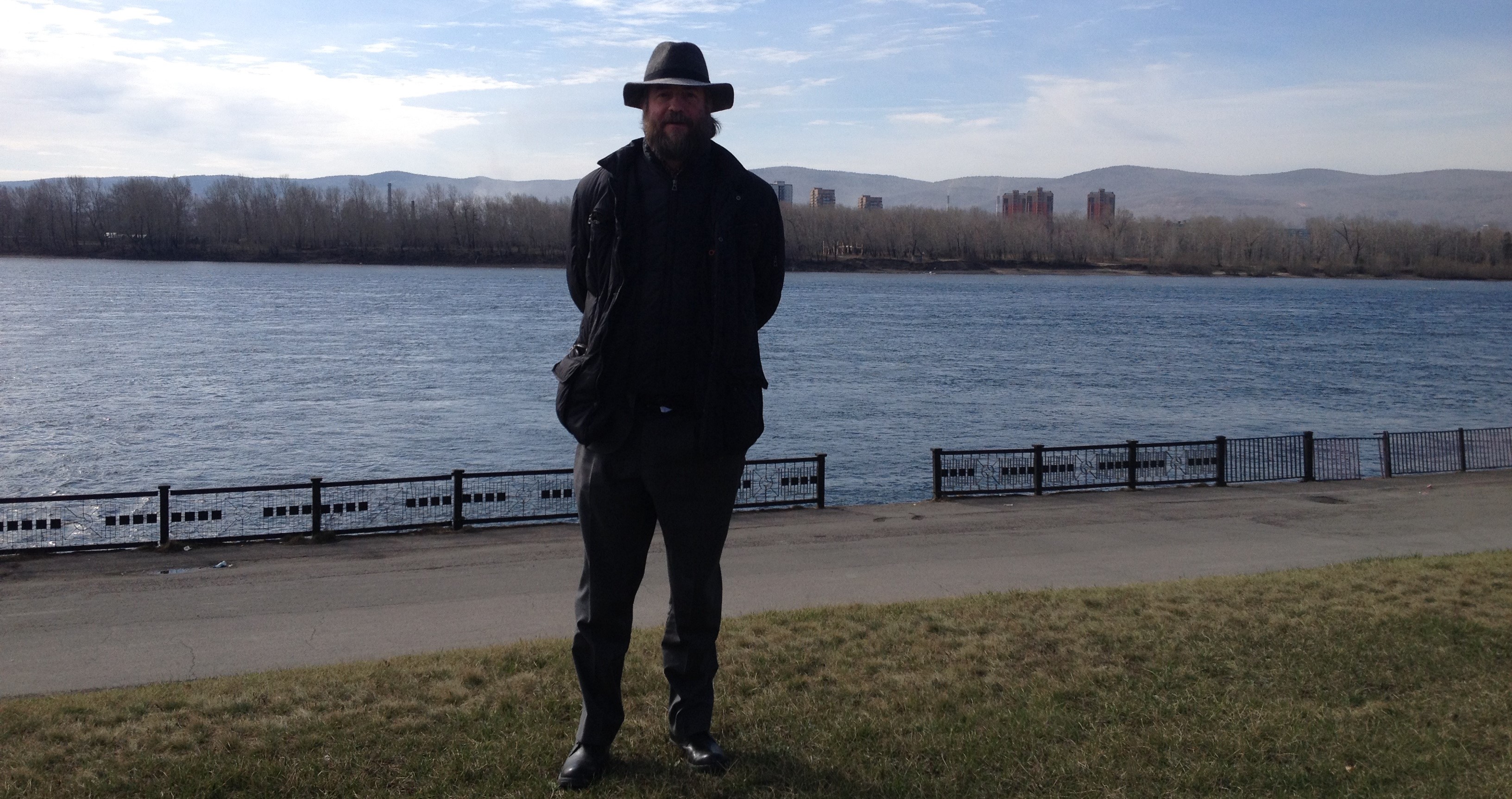
The Yenisei River runs through the city of Krasnoyarsk. It is the fifth biggest river in the world and one of the three major Siberian rivers, and it starts in Mongolia and flows into the Arctic Ocean. The morning after my arrival in Krasnoyarsk the first thing I saw when I opened the hotel curtains was this powerful river flowing past; blocks of ice still scattered in its waters a reminder of the winter only just past.

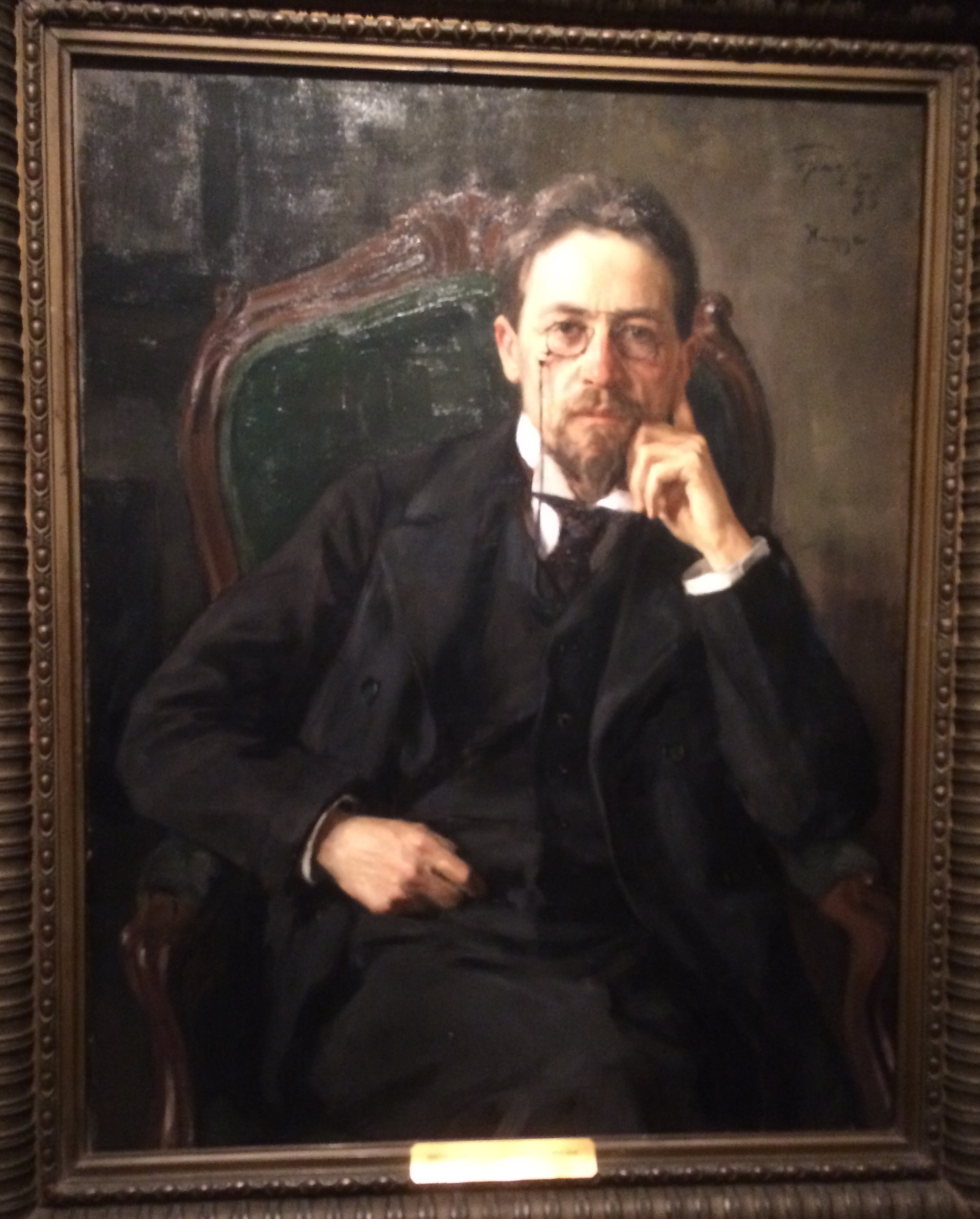
Jonathan Mc. 2jpgIn 1890, Anton Chekhov wrote, “On this bank lies Krasnoyarsk, the best and most beautiful of all Siberian towns…” Unfortunately, the beauty of the red cliffs, the river and the picturesque colourful wooden churches that was the city at the end of the nineteenth century has long gone. This is partly to do with the passage of time but more to do with Stalin’s policy to move the armaments factories from Western Russia to Siberia during the Patriotic or Second World War.

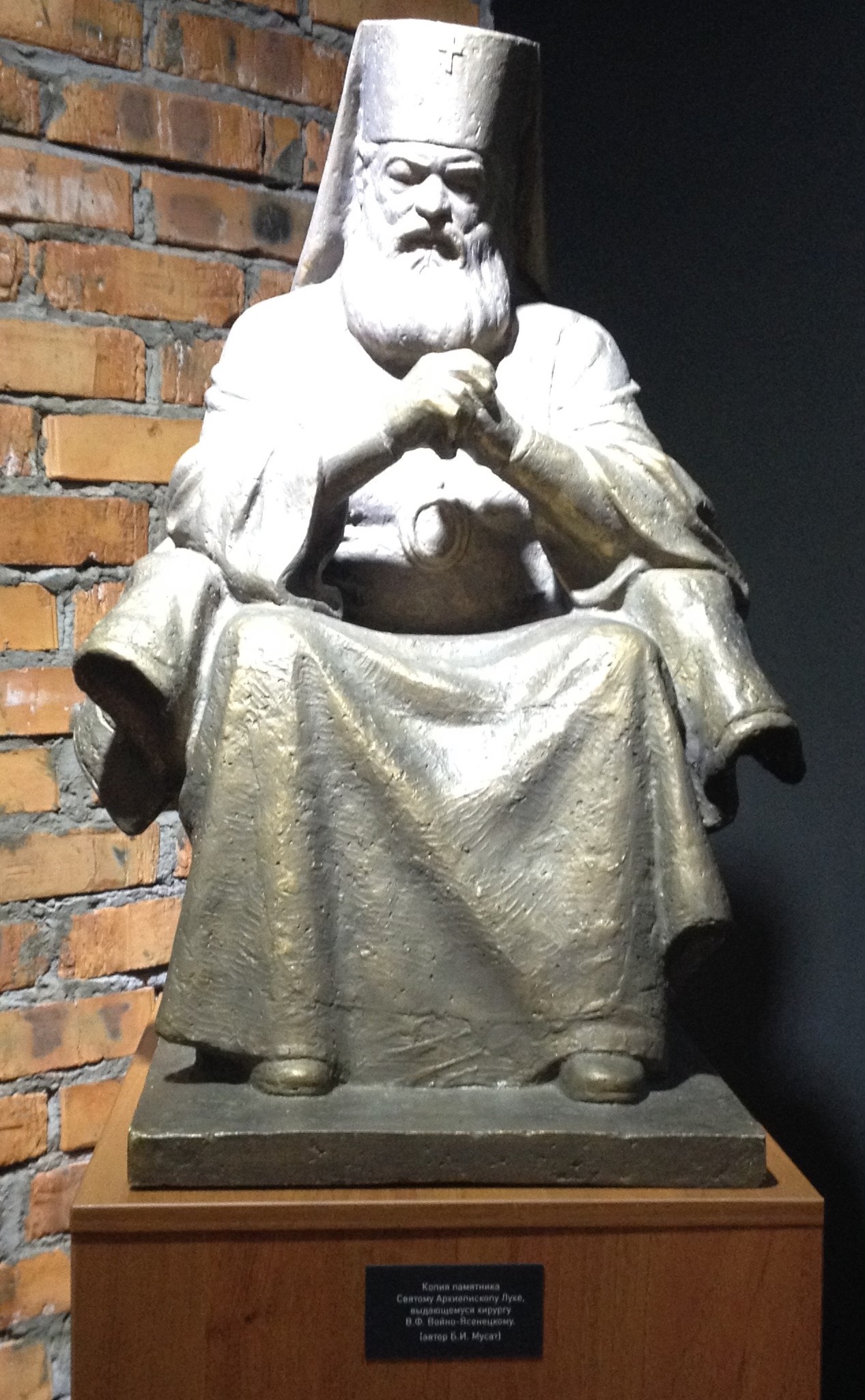
In April 2016, I was invited to Krasnoyarsk Medical University, and just its name took me into Russian tumultuous and extraordinary history for the university is named after Prof. V.F.Voino-Yasenetsky,Jonathan Mc. 3 an incredible man who was both an Orthodox Bishop during the Stalin years as well as one of the most eminent war surgeons known, whose quotation I took to heart –  “ For a surgeon, there must not be a “case”, but only a living, suffering person.”  A religious man, whose ability as a doctor and surgeon during the war saved his life, and whose work could easily fit into the long line of medical humanities stretching back to Hippocrates.

In Krasnoyarsk, I gave a lecture entitled ”English in Medicine: Lingua Franca, Education and Medical Humanities”, which was divided into two main parts: the first talked about the importance of English in medicine, the needs of non-English speaking doctors and health care workers, and some of the strategies needed.

The second dwelt on a new approach to the subject of teaching Medical English, and was a short introduction to the importance and use of humanities in Medical Education and Medical English. In the talk, the presenter introduced the topic with a quotation by William Osler, who stated:

“The practice of Medicine is an art based on Science”, and then proceeded to use short texts from recent medical writers such as Gavin Francis and Suzanne O’Sullivan (both practising doctors and writers) to introduce topics important to medicine; for example, “ Is disease a democratising force?” “Is Medicine an art?”, “What is the difference between disease and illness?”, and also a short clip from “The Doctor” was used to accompany the question, “How can a doctor feel empathy for his patient?”. Of course, these questions are difficult to answer, and there is no one true answer, but the idea behind them was to open debate and get the students thinking more deeply about these matters. It seems to have worked because last week I met the Head of the Medical English department, and she said that my talk, and my insistence on using the Humanities in Medical Education and English will become more and more important as medicine become more technologically oriented. The antidote are the humanities.

My short but intense visit to Krasnoyarsk was intensive and extremely stimulating, and I am resolved to return whenever I can; perhaps to journey up the River Yenisei.

As Kipling famously wrote, “East is east, and west is west, and never the twain shall meet” but the two should always meet, and, in my case do so, as I will explain in my next post.

The Reflective Conservatoire:shifting the paradigms,urging a transformative agenda

From the Reflective Conservatoire Special Issue Editorial

by

Helena Gaunt,Helena Gaunt

GSMD


Guildhall School of Music & Drama, UK

More: Reflective Conservatoire Special Issue Editorial

Table of Contents http://www.artsandhumanities.org/ahhe-journal/arts-and-humanit…ervatoire-15-3-4/

Fulfilling the potential of the paradigm shift now upon us means that institutions and all those working within them need an adaptive approach and dynamic skills (Helfat and Peteraf, 2009; Helfat and Winter, 2011). Both students and staff must find ways to work imaginatively, collaboratively and reflectively as ‘‘innovative knowledge communities’’ (Hakkarainen, 2013).

It is vital that we further champion the interface between education and professional worlds, increasing two-way influence and exchange, challenging rigid conceptions of transmission/apprenticeship or one-way traffic from professional to student, and making way for co-created laboratory spaces focused on experiment, collaborative enquiry and risk-taking, supported by rigorous feedback and reflection.

It is only this that will fully enable us to embrace the current renaissance that can reconnect the arts within the heart of society, helping new and innovative interdisciplinary work to flourish, and fuelling co-creative relationships between artists and ‘‘audiences.’’

It is only this that will enable us to embrace the global context of the performing arts and the potential of practitioners who move around the world, empowered to respond creatively to unfamiliar experiences and to produce work that crosses cultures and dismantles traditional boundaries, blurring the edges of long-established disciplines and developing new arenas of excellence.

The Reflective Conservatoire Conference has been grappling with these issues since 2006, bringing research and practice together to stimulate and support change within the sector, enabling experiment and reflection, professional exchange, artistic and educational innovation including interdisciplinary work at personal, curriculum and institutional levels. The sense of urgency around this agenda is gathering momentum, and in 2015 particularly addressed some interwoven challenges:

  • The place of the performing arts in society and their relevance across different sectors. Our disciplines risk losing their way and centrality to the fabric of society.
  • Professional work is faced with public funding cuts that are crippling abilities to maintain artistic standards and to take risks and innovate.
  • Perceptions abound in some quarters that the performing arts have lost touch with what people want and need in order to be able to express a voice; they have become a ghetto of an elite, usually the white upper middle classes consuming the arts as entertainment; diversity is not being embraced sufficiently, and inclusive approaches to performance, appropriate to the 21st century, are lacking.
  • New visions are required. In preparing the next generations of professional artists, ‘‘excellence’’ continues to be a key mantra. However, as contexts for the arts diversify and relevance to context is increasingly understood to make a vital contribution to excellence, the concept itself is becoming more fluid. It is therefore essential to extend and enrich traditional understanding of excellence and to embrace the reality of multiple excellences (Lerman, 2012; Renshaw, 2010).
  • Within curriculum change and enhancement of learning and teaching, ownership of the learning process for emerging artists is essential to empowering them to meet unknown future challenges.
  • This includes championing the potential of peer and informal learning, and the richness of engaging in communities of practice, alongside the process of accessing specific expertise of individual master teachers.

This special edition draws on a range of material from the 2015 Reflective Conservatoire Conference. It seeks to catalyze visions for specialist education/ training in the performing arts in 2020 and beyond, to consider current developmental initiatives, and to reflect on the contribution these can make to the fields of research and professional practice in the arts and humanities more widely

AHHE journal Reflective Conservatoire Special Issue: Editorial

Reflective Conservatoire Special Issue Editorial

byHelena Gaunt

Helena Gaunt,

GSMD


Guildhall School of Music & Drama, UK

We are experiencing a paradigm shift in specialist education in the performing arts: in what it takes to prepare students for professional life, and in the potential for this work to resonate beyond the immediate disciplines. The imperative to respond proactively to the pace of change in the creative industries, and in higher education more generally, needs little rehearsal. Since the rise of the portfolio career in the arts (Bennett and Hannan, 2008; Rogers, 2002) and the advent of the Bologna process bringing widespread awarding of degrees in these practice-based disciplines (EACEA, 2010; Gaunt and Papageorgi, 2010), artistic and pedagogical innovation through reflection, research, collaboration, interdisciplinarity and social engagement have gained momentum. Over the last 30 years significant renewal of our practices in specialist education has become a norm.

However, this period has largely been characterised by adding to existing practices within curricula, and there is now a significant challenge to take stock and evaluate the achievements.

  • To what extent have innovations delivered what is really needed?
  • At what point do curricula become overloaded, thereby diluting quality?

To my mind at least, there is a need now to revisit fundamental principles and values, to find ways to integrate traditional and newer areas of activity, and to clear out the clutter. Without this, it will become increasingly difficult to be sufficiently agile to respond effectively to the ever more rapid changes in cultural and educational landscapes.

Beyond the performing arts themselves, an even more powerful imperative towards a paradigm shift is also emerging. This concerns ways in which the performing arts connect within society as a whole, with how artistic and educational practitioners find ways to offer their expertise and experience. We know that music, theatre and dance are essential to our humanity in any society. They champion fundamental values and experience, human interdependence and interaction, individual and collective creativity, and the disciplined pursuit of a passion over a lifetime. They help us make sense of complex situations, and call us to recalibrate our own ethical compass and leadership, whatever our primary focus in life.

 In sum, they have enormous and multilayered value (Mowiah et al., 2014).

Yet so often, not least in higher education contexts, performing arts practices remain cloistered, doing little to help the cause of connectedness. Traditionally, practices of specialist education/training in the performing arts (and perhaps particularly in the focused environments of standalone conservatoires, drama and dance academies) have played out in relative isolation. Concentrating on the craft of an individual discipline, they have been less inclined to make connections across boundaries. In addition, those teaching have typically worked alone behind closed doors, often having inherited a powerful hierarchy underpinning the transmission of a craft from master to students. There have been relatively few opportunities for such teachers to engage in shared reflection and exchange.

Fortunately, proximity to professional practice in making and performing has in many cases enabled change to find its way into the educational frame. Standards have consequently continued to evolve aligned to the professions, and in many contexts a focus on, for example, making new work sits alongside engagement with a canon of established repertoire. Nevertheless, pedagogical renewal has tended to receive less institutional support and has been remarkable in some cases by its absence. Pedagogy has not kept pace with artistic, wider educational and societal developments, and has relied largely on a natural but gentle evolution of embedded traditions as they are passed from one generation to the next.

This is problematic in many contemporary contexts where long-held assumptions about the purpose and value of the performing arts are being challenged. It is essential that pedagogy and curriculum development now catch up and indeed start to help to drive the evolution and sustainability of these arts forms in society. At the very least, each and every emerging practitioner in the performing arts must be enabled to establish genuine roots in their discipline, to articulate their vision and purpose and reappraise these continually, and to connect their artistry in society in different ways.

At the same time, it is essential that the proverbial baby is not thrown out with the bath water. The mandate to lead change is considerable, but the challenges of realising it are indeed complex. Specialist education must continue to champion and embody the particular principles and highest quality of skills that are the hallmark of the performing arts. It is only too easy to dilute these and to abandon notions of excellence as horizons broaden and choices diversify. It is critical, therefore, to continue focusing on effective renewal within individual disciplines, as well as paying greater attention to the contribution that these disciplines can make to the humanities as a whole, and to society.

More – see

http://www.artsandhumanities.org/ahhe-journal/arts-and-humanities-in-higher-education-journal-special-issue-the-reflective-conservatoire-15-3-4/

ARTS AND HUMANITIES IN HIGHER EDUCATION

SPECIAL ISSUE: THE REFLECTIVE CONSERVATOIRE 15 (3-4)

TABLE OF CONTENTS