An arts and cultural education Polylogue: Days 3 & 4 by Pat Thomson

BBC Radio 3 &the AHRC’s New Generation Thinkers 2015.

Hay festival-walesBBC Radio 3 and the Arts and Humanities Research Council (AHRC) today at Hay Festival unveiled the 10 academics – and their research – who will be New Generation Thinkers 2015.

The scheme is a nationwide search for the brightest minds who have the potential to share their cutting edge academic ideas through radio and television.


The 2015 New Generation Thinkers are:

Catherine Fletcher, University of Sheffield
Catherine Fletcher is a historian of Renaissance and early modern Europe, specialising in cultures of politics and diplomacy. She’s recently worked on the Medici and Tudor courts. Her research also explores history in popular culture: at heritage sites, in film and TV, and online.

Sam Goodman, Bournemouth University
Sam Goodman is engaged in research on medicine and British national identity from 1750 to the present day. He has written on topics including the connection between James Bond and the Cold War pharmaceutical industry, emergency nursing in the Indian Rebellion of 1857, and the popularity of medical-based literature, television and film in contemporary culture.

Daniel Lee, University of Oxford
Daniel Lee’s research examines the experiences of Jews in France and in French North Africa during the Second World War. He will shortly begin a new project that explores Jewish pimping and prostitution in the Mediterranean, 1880-1940.

Peter Mackay, University of St Andrews
Peter Mackay is working on an anthology of transgressive Gaelic poetry over the last 500 years. His research interests include Scottish and Irish poetry of the 20th and 21st centuries and their place within ‘English’ literature.

Joe Moshenska, University of Cambridge
Joe Moshenska has worked on the importance of touch in religious and early scientific debates, the philosophical history of tickling and the reception of Chinese medicine in England. As a way of exploring the tastes, smells and textures of the period he is researching the 17th-century figure of Sir Kenelm Digby, a traveller who collected recipes from around the world.

Nadine Muller, Liverpool John Moores University
Nadine Muller researches the widow in British literature and culture from the 19th century to the present day. She has worked on projects exploring the Victorians in the 21st century, and on women and belief.

Kylie Murray, University of Oxford
Kylie Murray explores pre-Reformation Scottish literature, books, and culture. She has recently discovered Scotland’s oldest non-biblical manuscript, dating to the 12th century, and fresh evidence which suggests that James I of Scotland was the author of Scotland’s first dream-poem.

Sandeep Parmar, University of Liverpool
Sandeep Parmar is a poet and is currently writing a novel about the Green Revolution in India. Her research explores modernist women writers including Nancy Cunard, Hope Mirrlees and Mina Loy.

Danielle Thom, V&A
Danielle Thom researches connections between sculpture and print culture in 18th century Britain. She has recently explored the influence of Neoclassical nude figures on erotic prints, and is writing a book on the sculptor Joseph Nollekens.

Clare Walker Gore, University of Cambridge
Clare Walker Gore researches disability in Victorian literature, especially novels by Charles Dickens, Wilkie Collins, Anthony Trollope and George Eliot, and the biographies of the period, exploring the ways in which the lives of disabled people were portrayed.

The 10 winners, the fifth group of New Generation Thinkers, will spend one year working with Radio 3 presenters and producers to develop their ideas into broadcasts. They will make their debut appearance on Radio 3’s arts and ideas programme Free Thinking on successive editions beginning with a special edition of the programme recorded at Hay Festival and broadcast on Thursday 28 May featuring four of the winners. All of the New Generation Thinkers will be invited to make regular contributions to the network throughout the year.

Each New Generation Thinker will have an opportunity to develop their ideas for television, making short films for BBC Arts Online. A selection of short films made by the 2014 intake are available at bbc.co.uk/arts.

HASTAC 2015 28-30 May: Conference on The Art and Science of Digital Humanities

DML3PR pg-1

HASTAC Humanities, Arts, Science and Technology Advanced Collaboratory

HASTACdefinedhttp://hastac2015.sched.org/

 May 28-30th 2015
Thursday, May 28
9:00am
Friday, May 29
 9:00am


An arts and cultural education Polylogue diary -1&2

conference evening one

I’ve come to Bavaria to take part in something called a ‘Polylogue’. Like a dialogue but with many voices. It’s about arts and cultural education and/in/for Europe. Sponsored by three international foundations, 90 people from the fields of policy, research and professional practice have been brought together to discuss what arts and cultural education might do to support European sustainable development, understood in its broadest sense.

There’s an understanding that the European project is faltering. Laws and currency are insufficient to bring about a cosmopolitan democracy in which difference is a strength. Arts and cultural education are seen as crucial to the achievement of some kind of European future, what kind is of course up for debate.

conference blog day two 

Today we grappled with difficult questions. But after breakfast of course, not straight away.

Then down to work. We first of all had to consider what kinds of structural arrangements would make for strong arts and cultural education. Did we have any concrete suggestions for ways in which arts and cultural education could be supported? My group first of all had to talk about national curriculums, or lack thereof, and the various ways in which arts and cultural education appeared in a range of European countries. Ben from Amsterdam told us about the autonomy that schools and teachers have to design their own curriculum. Lotte from Sweden told us that there was nothing called cultural education in her country, but there was something called  children’s culture. We found out that the Danish government has just instituted a scheme where young people aged from 15-25 can apply for grants of up to 1500 euros for projects they want to do, rather than participate in programmes someone else has designed for them. All very interesting. In the end I think we agreed that it was pretty hard to think of single or simple structural arrangements to support arts and cultures education, and perhaps the notion of a menu of structures might be more appropriate.
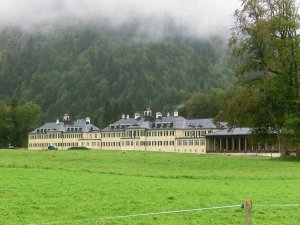
Lunch. A huge amount of salad in the dining area, open to the day’s sun.
image
The afternoon saw a walk to a mountain hut with coffee and cake, and everyone making a personal commitment to do something to advance arts and cultural education in their country. This was followed by another discussion group, this time about the vexed question of Europe.
 Was there “a” Europe? Did it have a common set of values? What were its current challenges? What might arts and cultural education have to offer? If the arts created empathy did that mean we were to be empathetic with the extreme, anti refugee right wing? If there was a European identity, how come noone felt they had one?  There was little agreement at my table, with the conversation starting with whether we meant the European Union, or Europe more generally. This was followed by lengthy debates about what the arts could do, whether it was instrumental to expect the arts to “do” anything at all, and whether these were world issues rather than simply those of Europe.
Then dinner. Another table groaning with salad and vegetables and finally the evening finished off with posters from participants showing some of the work being done across the continent.
More next!

A call: Public history and the new academic citizen

From ‘Back to the future? Public history and the new academic citizen’

Public History Weekly 

BLOGJOURNAL FOR HISTORY AND CIVICS EDUCATION: ‘We want to build bridges between research and application, politics and science, and the school and the university.’

Relief

…for a new academic citizenship?

What it means to be an academic is changing, as are the expectations that our students, our institutions and the wider world have of us. 

Professional history’s rich heritage of ‘public purpose’ – which public historians are uncovering – is one of the important resources on which the discipline can draw in reimagining academic citizenship.

Another is historians’ alertness to the problematic aspects of ‘citizenship’ in general. For example,

  • we’ve queried the nation as the natural source of human belonging;
  • we’ve challenged (and historicised) borders;
  • we’ve explored, alongside others, the intensely political nexus of education and national identity.

If we now take on the challenge of recasting academic citizenship, we won’t be coming intellectually empty-handed.

A third, and vital, resource is the culture and ethos of public history, a more recent manifestation of the idea that the past has important uses in society.

Public history brings an openness to the value of different perspectives.  Its practitioners rarely work alone, but through collaboration and conversation: with other disciplines and professionals; with our partners, networks and audiences.  This inclination for cooperation is surely an asset in a world in which academic citizenship can no longer be delimited by campus boundaries.

Now is the time for all those who practise and care about history to mobilise their resources to develop new models of academic citizenship: to make the past work for the future.

Reports, please! Knowledge as a Public Good Oslo, May 18-19 2015

Reports and responses very welcome: to the AHHE journal/blog – here and to AHHEresearch@gmail.com

The Re:Enlightenment Exchange 5: Knowledge as a Public Good

Oslo, May 18-19 2015

In our explorations of the Enlightenment heritage in the 21st century we have so far primarily focused on the forms, genres, and institutions, by which knowledge is produced, assembled, and transmitted. For the fifth Re:Enlightenment Exchange, taking place in Oslo May 18-20 2015, we will move beyond the forms and frameworks  and consider the actual work that knowledge performs in the world – how old and new knowledge gives rise to events, actions, innovations, and transformations.  This social, political, and intellectual dynamics is summed up in the phrase “knowledge as a public good”, where “good” is to be understood as a force at work in society, as something that can be shared, accessed, and used by all those who take part in that society. Thus, knowledge in the Enlightenment tradition is not something that can be kept within institutional borders, stored and transmitted by specific symbolic forms and their guardians. On the contrary, all knowledge comes with a pragmatic or even political index, and is released on society to change the context or situation, in which it emerged.

In the 19th and 20th centuries knowledge assumed its role in the world by means of specific institutional frameworks, first and foremost the disciplines, according to which only specific kinds of knowledge, produced by specific methods, according to specific theories, by means of specific technologies, and communicated by specific media, in response to specific knowledge needs in society, was as accepted as such. At the beginning of the 21st century, however, these needs have changed, and so have the technologies, and even the methods and theories, although at a much slower rhythm. The disciplines, on the other hand, distributing truth, power and wealth to certain kinds of knowledge, and not to others, remain more or less intact.

ReX5 will consist of three events, taking place at three different venues in Oslo.

More http://bit.ly/1QTDnqB

(more…)

15 May 2015: ‘literary studies as writing’ IES pedagogic criticism workshop

15 May 2015: ‘literary studies as writing’ IES pedagogic criticism workshop
writing6520116469_c543aa2d52reading images

Institute of English Studies

The performance of reading: literary studies as writing

How student writing shapes the discipline.

The conventional distinction between creativity and criticism has masked the degree to which critical literary studies have always been in some sense creative. Teacher critics and their students typically make texts out of texts in a layered and dialogic process of de- and re-formation. In this workshop we shall explore ways of articulating this process. Through a lens of structured activities we hope to generate refreshed understandings of the pedagogic act.

Speakers:

Dr. Chris Thurgar-Dawson (University of Teesside) Dr.Clare Connors and Dr. Stephen Benson (University of East Anglia)

15 May 2015, 14:00 – 17:00

Room 349 (3rd floor)

University of London Senate House, South Block

Malet Street, London WC1E 7HU

The performance of reading: literary studies as writing

How student writing shapes the discipline.

The conventional distinction between creativity and criticism has masked the degree to which critical literary studies have always been in some sense creative. Teacher critics and their students typically make texts out of texts in a layered and dialogic process of de- and re-formation. In this workshop we shall explore ways of articulating this process. Through a lens of structured activities we hope to generate refreshed understandings of the pedagogic act.


All seminars will be held at: IES, Senate House. Supported by the HEA. Organisers: Ben Knights, Robert Eaglestone (R.Eaglestone@rhul.ac.uk, contact for further details)

If you would like to attend please email IESEvents@sas.ac.uk.

The Humanities, the public intellectual and human flourishing

Something needs to be done – urgently. We are agreed – right? But what?

(Robert Garland, AHHE v 11.3, ‘The Humanities Plain and Simple’)

His answer, below:

‘If more of us could commit to having a public, extra-curricular role, we might even stare down the specter of humanistic decline.’

Some provocations:

‘The Janus face of the public value of arts and humanities research’

from the Special Issue: Public value of the Arts and Humanities Research ed Belfiore and Benneworth 14.1

and

The Humanities: plain and simple

Robert Garland

Something needs to be done – urgently. We are agreed – right? But what?

From this starting point I mean to ask hard questions about the humanities, even at the risk of appearing subversive, because I seek answers, plain and simple, to questions I am struggling to answer myself. These questions have been troubling me for some time: it has only been the invitation to write this article that has stimulated me to perceive them as part of a unified whole.

What is intrinsic to the humanities in contradistinction to other branches of academic inquiry?

What goods or effects do we who teach the humanities claim to impart to our students?

What should be the purpose of research undertaken in the humanities?

Should a humanities curriculum implicitly or explicitly emphasize values?

And finally, what is the role of the humanities in society?

This article raises a number of questions that the author believes need to be addressed in order to defend and justify the teaching and practice of the humanities in an age when they continue to face swingeing cuts and unreasoned attacks from many quarters, both inside and outside the Academy. They are questions that have to do with the uniqueness of the humanities, its role in teaching values, the objectives of research, the connection between research and teaching, the value of an education in the humanities for society overall, and the ways in which humanists can play a useful public role. In sum, the author advocates for a coherent justification for what the humanities, plain and simple, are (or is).

Has, as Bronowski claimed in the 1970s, moral leadership passed to the sciences? If we, rather than the scientists, have in our arsenal the language to evaluate values, why are we so consistently otherwise engaged?

My next question has to do with the issue of the role of the humanities in society – a particularly urgent one in an era when economic growth is seen by a majority of politicians as the ultimate goal and when subjects taught are assessed by their usefulness in the job market. How pertinent is it that the humanities should occupy a space within the arena of public debate and, more bluntly, what is it of genuine value that the humanities in primis have to offer?

I increasingly feel uncomfortable in participating in conferences and colloquia if the issues under debate have absolutely no bearing on the quality of human life. This is partly because I myself have benefited so richly from being permitted to engage in my passion without ever being held accountable. For me, it’s payback time. I believe that all of us, as humanists, have a duty to be active in exporting our expertise beyond the gates of the academy.

There are several ways in which we can do this, both to the benefit of society and to the health of the humanities. One is to contribute to a popular journal or magazine that reaches the educated reading public. Writing for such a readership can be as challenging as writing for experts. In addition, it may have unexpected benefit for one’s research, not least by making one think afresh about a welltrodden line of inquiry. If, moreover, a subject of research engages one’s attention for several years and yet has no interest for the educated public at large, then there must at least be a question as to whether those years spent were worthwhile.

Alternatively one might offer a pro bono course on line for anyone who chooses to sign up for free under a growing number of initiatives.

Another avenue is to engage in outreach to one’s local community by offering introductory courses in one’s area of expertise, tailored to the specific needs and interest of the community – a particularly valuable exercise in rural areas like Upstate New York where I reside; or to explore ways in which a social or political dimension to one’s discipline and research interests might help inform public debate, rather along the lines of the conference on ‘Lessons from Antiquity for the Obama Administration’ that I mentioned earlier.

Yet another avenue is to participate in humanities-related ‘festivals’. One such is the annual Chicago Humanities Festival. This hosts over a hundred events connected to humanities-related disciplines, not only literature, philosophy, and arts and architecture, but also history and public affairs. Even science and technology are included, in cases where they are seen to have a particular connection to the humanities. Another Chicago initiative is called the Public Square, which in the words of its home page ‘fosters debate, dialogue, and exchange of ideas about cultural, social, and political issues with an emphasis on social justice’. Typically the debates take place in coffee shops and barber shops. I think it would be eminently worthwhile in any community of intellectually engaged citizens for humanities faculty to engender debates on similar topics.

It might not be inappropriate to consider redefining ‘service’ as the application of knowledge in the service of the public good. In all these ways the humanities have a special part to play. If more of us could commit to having a public, extra-curricular role, we might even stare down the specter of humanistic decline.

More


Parrhesia:’Unjustly Neglected-How Music was Banned and Forgotten’ 19th June

 Parrhesia

 After a decade of heady artistic freedom, the Nazis banned the work of artists…
forbidden-music-haasweb_0

Martin Anderson, writer and editor, Toccata Press at Kings Place, London, Friday, 19 June 2015 – 6:30pm

St Pancras Room:Free, but a ticket is required. Please call the Box Office on 020 7520 1490.

After a decade of heady artistic freedom, the Nazis banned the work of artists because they were Jewish, modernist or politically left wing. Forbidden from performance, publishing and sale, composers fled into exile, most never to return to Germany and Austria. Writer and editor Martin Anderson, who has chronicled many composers under the threat of official suppression, tells how music was proscribed and remained neglected for many decades even after the defeat of the Nazis in 1945.

This talk precedes 

 The CONTINUUM ENSEMBLE – Opera in Miniature: Toch, Weill & Hindemith
Music / Friday, 19 June 2015 – 7:30pm / Hall One, King’s Place, London

Paul Hindemith There and Back (1927)

Ernst Toch Egon and Emilie (1928)*

Kurt Weill Vom Tod im Wald (Death in the Forest)(1927)

Mahagonny Songspiel (1927)
*UK premiere

The Continuum Ensemble are joined by a host of soloists to explore adaptions of opera for modern times. Composers typically created short works, some of only twenty minutes, with contemporary characters, comic settings and satirical plots.

Lucy Cavendish-Cambridge College for Women over 21- New Voices


Lucy Cavendish

Lucy Cav poem readerslucy cav 50 logo Readers of 50 Poems by ”remarkable and inspiring women poets” http://www.lucy-cav.cam.ac.uk/fiftypoems/list-of-poems/


Lucy Cavendish 2015 Graduate Research Day: Humanities and Social Science Abstracts

* Elizabeth Forbes. Researching Creative Writers’ Self-Identities

The focus of my research is the development of creative writers’ self-identities in the context of mentoring and HE teaching relationships. Fieldwork and analysis were undertaken using Interpretative Phenomenological Analysis (IPA) in a narrative framework. I am now in the depths of writing my thesis. This short presentation will focus on key aspects of the argument for my thesis including the implications of this research for our understanding of the nature of creative writers’ identities and the significant qualities of such developmental relationships.

* Stephanie Guy. Racial Histories and Everyday Lives: ‘Mixed-race’ experiences in Australia and the United Kingdom

This research is concerned with how State (mixed-)racial histories and policies influences social perceptions of mixed-race young people and their own self-concept, and how this effects their day-to-day lives. Grounded in critical mixed-race studies, this research takes a phenomenological approach to critically view the differences in Australian and United Kingdom social and racial histories and policies, and their impacts on the social value placed on mixed-race lives. ‘Mixed-race’ people, those who are descended of two or more groups socially understood to constitute distinct ‘races’, are a fast growing demographic, and evaluating the way each country attends to this population is an insight into differing approaches to issues of ‘race’ in general. Through historical and policy comparison, this research will attempt to locate the point where the United Kingdom (and not Australia) promoted mixed-race as a social policy issue, and how state and social validation of mixed-race identity as a legitimate racial self-ascription impacts on mixed-race experiences.

* Joyce Lau. Iran and the International Politics of Oil

At the turn of the twentieth century, Iran was home to nearly 10 million people of which ninety percent were employed in agriculture. A pawn in the Great Game between Russia and Great Britain, the country found its political policies defined by the interests of world powers rather than by the needs of its domestic constituents. By 1979, this dynamic had drastically changed. The Iranian Revolution replaced the proWestern government installed by Allied troops in 1953 with an anti-Western Islamic Republic. Its economy underwent a similarly radical transformation with rapid growth in trade and increased investment in manufacturing funded by revenues from the exploitation of oil. Although interest in Middle Eastern oil had already started by the late 1800s, it was not until 1909 with the formation of the Anglo-Persian Oil Company (APOC), now British Petroleum, that the Iranian oil industry as it is today was truly born.
My MPhil dissertation will explore the relationship between the prolific rise of the oil industry and Iranian diplomatic bargaining power from 1909-1979. It will examine exchanges between the Foreign Office to British legations in Iran and documents from the US Secretary of State, focusing on the creation of APOC in 1909, the revisions to the oil concession in 1933, the nationalization of the Iranian oil industry in 1951, and the oil crisis in 1973.

*Lucia Linares. The high cost of peace – tackling the issue of sexual exploitation and abuse in United Nations peacekeeping operations; design failure or implementation disaster?

Despite the good intentions of United Nations peacekeeping operations, the large deployment of personnel can oftentimes have serious unintended consequences on both the economy and society of the host country. This has been largely under-researched by scholars and practitioners alike. With a history of being under acknowledged, one of the most negative consequences of peacekeeping operations is the involvement of UN personnel (military, police or civilian) in sexual exploitation and abuse (SEA).
Since 2003 a number of measures have been taken by the United Nations to tackle SEA by UN personnel in peacekeeping operations and yet the issue still persists. The question arises whether these are isolated incidences of individuals not following the UN codes of conduct or is there a larger underlying structural issue in UN initiatives to date? Intersecting at the legal, economic, political and cultural level this issue highlights the complexities of the United Nations and raises serious questions of responsibility and accountability for the state and International Organisations.
Using feminist methodology, this paper will engage in a critical discourse analysis of official policy reports, pre-deployment training guidelines as well as interviews with UN personnel and survivors of sexual violence in order to assess whether the issue of sexual exploitation and abuse by UN personnel can continue to be tackled at the policy level or if there are deeper root causes that have yet to be properly addressed.

* Amina Saleh. Classical Islamic normative philosophy: A study of reason and religion in Miskawayh’s ethics
What makes a system of ethics Islamic or religious, and what is its relationship to reason?

I am applying this question to the works of one of the most prominent writers of early Islamic moral philosophy: Miskawayh, a 10th – 11th century philosopher and historian who spent his life in present-day Iran and Iraq.
A brief discussion of the tradition of Western scholarship on Arabic and Islamic philosophy will be followed by an examination of the terms ‘normative philosophy’, as well as ‘reason’ and ‘religion’. Using the example of Miskawayh’s main ethical work, The Refinement of Character, I introduce Medieval Islamic philosophy in the context of its major intellectual influences, namely Ancient Greek philosophy and Islamic theological debates. While some of the scholarship classifies Islamic ethics according to the extent to which ethical reasoning is primarily based on scripture or rational discursive and syllogistic methods, other models distinguish between normative and analytical ethics, each of which can be secular or religious. Locating Miskwayh in these categories, I examine why he has been called an ‘Islamic humanist’ and whether his intellectual interest is leading him to explore religious aspects of ethics or whether his motivation is to seek the philosophical rationale behind the revelation he believes in.