AHHE Special Issue Forum on the Public Value of Arts and Humanities Research

AHHE Special Issue Forum on the Public Value of Arts and Humanities Research

Special Issue Flyer 14.1

As everyone involved, institutionally or personally, in academic performance evaluation will vouch for, policy-makers are increasingly demanding that academics justify themselves in terms of the ‘return’. This is a timely international forum on and advocacy for the impact and the public value of Arts and Humanities Research.

Emotional Bottlenecks to Learning

As professional historians, we are able to do history like professional rock climbers—without ropes, which to students might look something like this:

emotional

You have to really like it to go for it. But you have to get ready for it, too. (Photo courtesy of stockvault.net)

Our years-long training in historical thinking provides us with the necessary skills to do this. Our students, however, need to start with a different type of rock climbing, which we could call “rock climbing with ropes,” or learning history with their teacher’s guidance and help.

bottlenecks

This is a lot less frightening, isn’t it? (Photo courtesy of Petzl/Lafouche)

Naturally, many students do not like climbing without ropes, and their instructors may experience resistance to such learning: “The students in my class do not want to work hard and learn.” And who could blame them? Learning such climbing demands a massive amount of time, effort, and commitment.

But research by our Affective Learning Project shows something different to boot. To every class, students bring pre-formed narratives about that class’s content and format. When classroom experiences do not match students’ expectations, emotional bottlenecks arise. Many students might stop wanting to learn. Analyses of faculty and student interviews reveal two kinds of student preconceptions:

* procedural (regarding how history, or rock climbing, works and how it should be taught), and

* identity-based (revealing two modes of thinking: “I am/am not a good rock climber” OR “The instructor has something against me or ‘my kind’ of rock climbers”).

Research on misconceptions about science, alongside neuroscience on emotions, has illuminated this phenomenon. From the education specialist Micki Chi, our team of researchers learned to show students the contrast between the ways they are thinking about a concept VERSUS the way an expert does. Why? As professional historians, we don’t want our students to make serious cognitive mistakes because cognitive and affective aspects of learning are interrelated! When students watch experts model their own successful confrontation of these emotional bottlenecks, they learn critical tactics for achieving historical literacy as well.

When addressing student emotions, some people assume that the instructor’s response should also be emotional. But learning—or, more exactly, conceptual change—is the goal. Yet our research also shows that emotions are intertwined with all learning. Students who have not previously written poetry, for example, may have an inner narrative about not being a poet and not being able to write a good poem. Tony Ardizzone, Emereti Professor at Indiana University, was able to break this poetry-writing bottleneck into component parts (see his lecture). With the mental actions modeled well, the students are more likely to master these skills. Here is one example:

emotional bottlenecks

Prof. Ardizzone at Introductory Creative Writing, consisting of a weekly lecture and small-group writing workshops 3 times a week. (Photo courtesy of Indiana University)

The Decoding the Disciplines theory that we use in our article helps to make sense of emotional bottlenecks, starting with the first step: identifying the problem. Where are the students getting frustrated? What mental action on the part of the teacher helps the teacher to avoid the frustrating bottleneck?

Our article provides a case study of getting students to move through the emotional bottleneck related to the study of Mexican immigration to the U.S. It shows mental modeling through a metaphor of monarch butterfly migration. That way, instructors avoid the emotional resistance that undermines learning—whether their subject is history or any other field. Once instructors recognize emotional bottlenecks, they can direct students to the appropriate mental operations to avoid them. Without emotional obstruction or at least aware of where it might arise, students can start learning to climb without ropes.

By Joan Middendorf, Jolanta Mickute, and Tara Saunders

Editorial:Addressing extremism and offensiveness, fear and fanaticism

AHHEcropFrom the Editorial to 14.2  http://ahh.sagepub.com/content/current

ParrhesiaIn ‘Balancing Agendas: Social Sciences and Humanities in Europe’, Gabriele Griffin (Arts and Humanities in Higher Education, October 2006; vol. 5, 3: pp. 229-241 ) wrote about the film representation of one of the London bombers as an example of the Arts and Humanities providing both insights into and perspectives on the challenges Europe faces in the 21st century.
Her article came out of a ‘complex, multi-paradigmatic and generous humane conversation’ reported in ‘‘‘What have the Humanities to Offer 21st-Century Europe?’’ Reflections of a note taker’ (Parker, 2008)

and specifically from her address to a 2005 European Commission Conference on the Humanities and Social Sciences in European research. Her keynote address started with what she saw as the main ‘future challenges’ as, not (only) military, economic and environmental
but the central destabilisation arising from fear and fearfulness.
Ten years later, her words could have been written, or blogged, yesterday:

‘The rise of Islamic fundamentalism in our midst, so to speak, which this film – My Son
the Fanatic – addresses and which had its real-life equivalent in the London bombers,
raises all manner of important questions, from the efficacy of multicultural policies,
now very much under attack, to questions about our understanding of social relations
and cultural formations among diverse communities.[…] In my view we pay far too
little attention to such cultural representations, traditionally the domain of humanities
disciplines, which render visible cultural moments, movements, and tectonic shifts that
we need to learn to see and read, not least in the interests of our (inter)national
security. There is a long and honourable tradition in the Arts and Humanities and
their objects/subjects of enquiry of (to use a Quaker saying) ‘speaking truth to power’,
and this makes these domains important for research purposes, not least because they
offer challenges to prevailing dominant discourses. (Griffin p.234)

Twenty-first-century Europe is generally perceived as a complex, fearful place in
which to live and work (Parker, 2008: 86). The root of the fear seems to be two-fold
– fear of not being able to account rationally for things, and/or fear at the
impossibility of acting rationally in the face of the conflicting and incompatible
accounts offered of observable phenomena.

Drawing, finely, on Butler and Bourdieu, she concluded: ‘The humanities’ fundamental
processes offer engagement with fundamental issues, without offering
simplistic ‘comprehension’. Rather, they habitually deal with conflicting and
incompatible paradigms, producing narratives of multi-faceted data that can
address multiply situated audiences – including those excluded by the rhetoric of
‘us and them’ or of power (Griffin, 2006: 236).

‘Speaking Truth to Power’: Challenging prevailing discourses
Truth power cloudHow can this internationally peer-reviewed journal address, and offer Humanities and Arts answers to, contemporary challenges?

How challenge prevailing discourse?
Well, that’s the question! Our answer has always been to look to, generate and
publish transformatory work and essays and new voices offering challenges from the
classroom. We have set up this blog and advocacy site offering some disciplinary
answers: for, if the challenges of fundamentalism, of fanaticism, of identifying the
self against or with the ‘other’ are only too clearly still current, the site of conversation
has to some extent changed. We still publish in this journal such addresses to important
international conferences revised after feedback and reflection and multi-continent
‘blind’ peer review; we still organise, edit and publish topic and discipline-based
fora; but the location of initial discussions has changed and their pace speeded up.
In the month of Charlie Hebdo and ‘the mutating terror threat’ (Maher, 2015),
we started a discipline-based ‘Parrhesia’ blog which came out of a Classics ‘sandpit’
about the question whether the university classroom should respect all sensibilities
or be a special place where any views should be freely expressed and
explored. ‘Are [Aristophanes’] Rape jokes ever funny?’; ‘From Abortion to
Pederasty: DIFFAHHELogoICULT AND SENSITIVE DISCUSSIONS IN THE

[CLASSICS] CLASSROOM’ and ‘Parrhesia: THAT’S
OFFENSIVE! CRITICISM, IDENTITY, RESPECT BY STEFAN COLLINI’
which has resulted in an upcoming journal forum on the
topic.
This is one small but timely example of what we hope to do in a blog and
advocacy site which will build into a disciplinary and topical resource  to add to our 15 volumes of Special and Virtual discipline-based issues.AHHEcrop
In ‘What have the Humanities to Offer 21st-Century Europe?’ we claimed:
The Humanities can address, and indeed specialize in accounting for, such complex observable phenomena as, for instance, the rise of terror. The Humanities’ fundamental processes offer engagement with fundamental issues, without offering simplistic ‘comprehension’. Rather, they habitually deal with conflicting and incompatible
paradigms, producing narratives of multi-faceted data that can address multiply-situated audiences – including those excluded by the rhetoric of ‘us and them’
or of power.

More, the narratives explore, while explaining, the basic modes of
inquiry, offering plurally-narrated models of essential mechanisms such as cause
and effect.

Humanities’ critical accounts contain, in self-authorizing narratives, critique of the paradigms themselves. Indeed, the narratives question the paradigms
that support the inference of cause from effect.

They offer problematizing, hypothesizing, reflective and synthesizing accounts of data that take into account the plural explanatory possibilities.

In a complex world, in which overarching explanatory paradigms are hard to find and harder to use to explain particulars, humanities’ methods offer rich forms of explanation of significance and singularity. (Parker, 2008: 86)
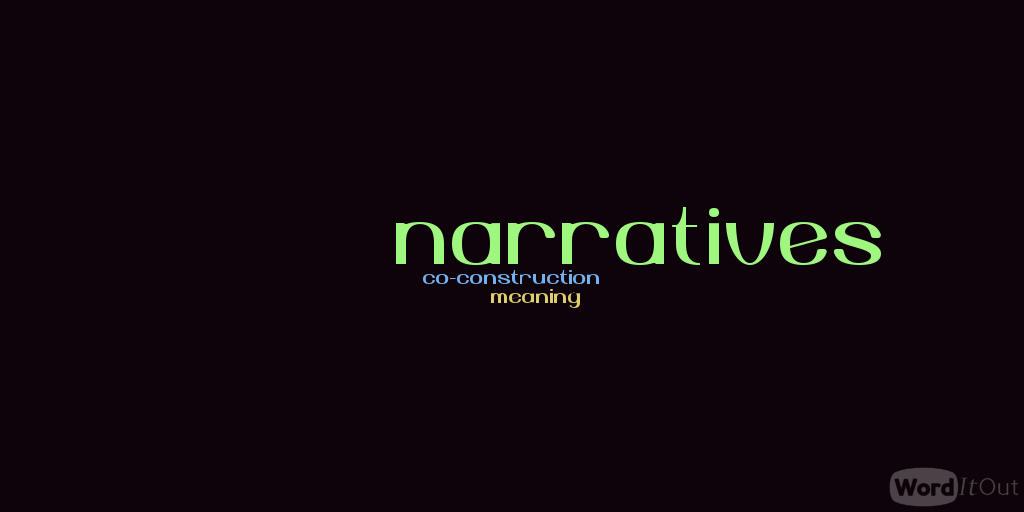
WordItOut-word-cloud-918899Narratives explore, while explaining, the basic modes of inquiry… critical accounts contain, in self-authorizing narratives, critique of the paradigms themselves…
rich forms of explanation of significance and singularity….

We hope that each of our issues contains exemplary writing: paradigm-challenging essays, illuminating case studies, reflections on innovations in, values of and advocacy for our disciplines’ meaning-making processes.

AHHE New Article Jacob’s Ladder:The Comprehensive Exam by Sara Scott Shields

AHHEcrop

Arts & Humanities in Higher Education 2015, Vol. 14(2) 206–227 http://ahh.sagepub.com/content/14/2/206.full.pdf+html

Like climbing Jacob’s ladder: An art-based exploration of the comprehensive exam process

Sara Scott Shields Department of Art Education, Florida State University, USA

“And he [Jacob] dreamed, and behold, there was a ladder set up on the earth, and jacobs ladder.docxthe top of it reached to heaven!”

(Genesis 28:10–12, English Standard Version)

The comprehensive exam process is a rite of passage in the scholarly world, and as such the movements of this process often feel like a guarded secret to graduate students.   As a recent graduate from a PhD program, I feel as if I have just woken up from a dream much like Jacob’s, a dream where I was faced with the impossible task of ascending (and sometimes descending) a ladder leading nowhere and everywhere at the same time. The chaotic but organized movement of comprehensive exams, prospectus, and dissertation writing is one of great struggle followed by pronounced triumph; however, when it is over, the memory of it quickly begins to fade. With graduate school behind me, I feel the once vivid experience quickly fading from my consciousness, much like a dream. In an effort to create a tangible moment, I have chosen to collect and share a portion of my own experience in graduate school. This is my story of climbing Jacob’s ladder. While it is a story about my experience with the comprehensive exam process, it is also a story about how I used art to process the process of becoming.  In this article I walk you through my own experiences during graduate school, narrating and illustrating the text with excerpts from my exam responses, art making and journals. While one aim of this paper was to explore my own experiences in graduate school, the overarching goal was to create something that graduate students could read before entering into the comprehensive exam process.  Something that reminds them the most valuable part of the experience is not in the bound final paper, it is not in the nerve-racking defense; rather it is in the experience as a collective convergence of thinking and reflecting, it is this that offers the greatest opportunities for personal growth and scholarly development.  Write on my fellow emerging scholars!  Write on!


Sara Scott Shields is a recent graduate from the University of Georgia with a PhD in Art focused in art education. She is currently an Assistant Professor of art education at Florida State University. Her research interests revolve around arts-based approaches to both research and learning, with a specific focus on arts informed qualitative research methodologies, visual thinking strategies in higher education curriculum and pedagogy, and teacher/researcher identity development.  She can be contacted at skshields@fsu.edu or on twitter @sarasshields


Arts and Humanities in HE New Issue: Meeting the Challenge

AHHEcropMeeting the challenges: This issue  http://ahh.sagepub.com/content/current

This issue starts with two examples of discipline-boundary-crossing materialculture projects: ‘Ethnography by design: On goals and mediating artefacts’(Fabian Segelstrom and Stefan Holmlid, pp. 134–149) and ‘Toward a pedagogy
for faculty and student co-responsibility in curating college museum exhibitions’
(Susan Rodgers, pp. 150–165).
Then we have a contribution to an ongoing concern with projects that look to
the disciplines’ epistemological bases when planning teaching and learning: Joan
Middendorf and colleagues’ ‘What’s feeling got to do with it? Decoding emotional
bottlenecks in the history classroom’ (pp. 166–180).
Emotional bottlenecks, like difficulty papers and threshold concept theory, point
to forms of ‘troublesome knowledge’ which interrupt and complicate – not in a bad
way! – students’ unilinear progress of ‘knowledge acquisition’ and draw attention
to the importance to our disciplines of students’ own disciplinary meaning-making.
See also the seminal:

  •  ‘On the Evidence of Theory: Close reading – the signature critical practice of
    literary studies – as a disciplinary model for writing about teaching and learning’
    by Randy Bass and Sherry Lee Linkon (AHHE 7(3): 245–261); and
  • Pat Hutchings and Mary Taylor Huber’s ‘Placing Theory in the Scholarship
    of Teaching and Learning’ (AHHE 7(3): 229–244). ‘Faculty are often led
    to theoretical literature in their own or neighboring disciplines to
    puzzle out troublesome aspects of student learning or to get a
    handle on what ‘‘deep understanding’’ in their field might really look
    like’. Also:
  • ‘Boundaries, Signature Pedagogies and Theorizing’ by the Editors (AHHE 7(2):115–116)
  • and the Digital Storytelling Forum (AHHE 7(2): 165–223):
  • ‘As a Signature Pedagogy for the New Humanities’ by Rina Benmayor and
  • Critical trajectories from the emotional to the epistemological’ by Matthias
    Oppermann;
  •  ‘Signature pedagogy/powerful pedagogy: The Oxford tutorial system
    in the humanities’ by Julia Horn (AHHE 12(4): 350–366); and the
    forthcoming
  • ‘Transforming conceptual space into a creative learning place: Crossing a
    threshold’ by Kirstine Moffat and Anne McKim, OnlineFirst

Academic identity [in] changing disciplines
The next two articles both reflect on the potential for and the challenging position
of the discipline academic in a changing disciplinary landscape: ‘Discipline identity
in economic history: Reflecting on an interdisciplinary community’ (Martin
Shanahan, pp. 181–193) and ‘Uncomfortable departments: British historians of science
and the importance of disciplinary communities’ (Aileen Fyfe, pp. 194–205).
We have an intermittent series about disciplinary change:
.

  • ‘Is Communication a Humanities Discipline?: Struggles for academic identity’
    Bruce E. Gronbeck (AHHE 4(3): 229–246); and
  •  ‘Is Law a Humanity: (Or Is It More Like Engineering)?’ by David Howarth
    (AHHE 3(1): 9–28).
    And a long extending interest in/interrogating ‘becoming disciplined’, including
    reflections by as well as on New Voices:
  •  ‘Exploring a metamorphosis: Identity formation for an emerging conductor’ by Cayenna Ponchione (AHHE 12(2–3): 181–193);
  • ‘Exploring religious identity through the arts: A call to theologians’ by Rosalind Parker (AHHE 13(1–2): 88–100);
  • Becoming a Music Student: Investigating the skills and attitudes of students
    beginning a Music degree’ by Karen Burland and Stephanie Pitts (AHHE 6(3):
    289–308);
  •  ‘Intelligence and Interrogation: The identity of the English student’ by Ben
    Knights (AHHE 4(1): 33–52).

jacobs ladder.docxCreative critical writing
Finally, we are very pleased to publish a different kind of thesis, hopefully exemplifying
the kind of creative critical writing explored by Gavin Melles in the ‘Editorial: Pedagogies, writing and identity’ and, with co-founder of Writing PAD, Julia Lockheart, ‘Writing purposefully in art and design: Responding to converging and diverging new academic literacies’ (AHHE11(4): 329–332 and 346–362).
‘Like climbing Jacob’s ladder: An art-based exploration of the comprehensive exam process’
(pp. 206–227) by Sara Scott Shields, is ‘an artful documentation of my journey
through arts-based engagement with artifacts from my comprehensive exam process’.
We invite comments in response via the blogsite and submissions to our forthcoming
special issue dedicated to the dynamic of form and content in critical work,
Matters Creative and Critical. Contributions are invited from established as well as
early career writers and researchers, and the volume seeks to showcase the range of
cultural critical investigation currently under way. Contributions might include but
are not limited to:
. the essay
. the dialogue
. the visual essay
. the fragment or fragments
. the memoir
. the critical narrative
. the manifesto
. poetry
. … …

HEA Embedding equality and diversity in the curriculum: an art and design practitioner’s guide



equality-diversity-inclusionHEAEmbedding equality and diversity in the curriculum: an art and design practitioner’s guide

1. Setting the scene 3

This is a practical guide to issues of equality and diversity in the curriculum specifically related to the art, design and communication subject discipline. It considers relevant discipline specific theories and strategies and reflects on the challenges the sector still faces within this area. It also shares concrete examples of good practice through a series of short case studies that can support and inspire teachers. It is by no means a definitive guide and only provides some initial signposts, which can be built upon and disseminated more widely. The importance of this resource is linked to the increasing student diversity within our institutions who expect a broader curriculum and learning experience, which reflects more closely the global diversity of the international creative industries. The National Union of Students has produced a document entitled Liberation, equality and diversity in the curriculum (NUS 2011a) that supports the view that students are seeking something more from UK higher education (HE) than they once did. This change in context has also been informed by widening participation, a rise in international students, and changes to disability legislation. What this means to us as a sector is that who we teach, what we teach, how we teach, and why we teach is increasingly under the microscope and it is essential to practice a pedagogy that offers equality of success and value. The value in this context is visual, through representation in the curriculum and through making all spaces more inclusive, whether they are studio, workshop or digital spaces, thereby creating more opportunities to share and engage more diverse perspectives, knowledge, contributions and concepts.

How we respond to and develop a supportive student experience is through:

inclusive pedagogy within the studio/workshop;

inclusive curriculum within the course;

inclusive institutional policies and practices.

In short, this is everybody’s concern and we need to find creative, flexible and sustainable ways to go forward in partnership with students. This guide acts as an addendum to the extremely useful publication Inclusive Practices, Inclusive Pedagogies: Learning from Widening Participation Research in Art and Design Higher Education, edited by Bhagat and O’Neil (2011), which is available online.

2. Current state of play 3

3. Challenges 4

4. Theories and strategies 5

5. Case studies 6

5.1 Staff training on inclusivity 7

5.2 Shades of Noir 8

5.3 The new model dissertation 9

5.4 Seeing is believing 10

5.5 Creative Research into Sound Arts Practice 11

5.6 Use of English and modes of thinking 11

6. Guidance on implementation of inclusivity 12

HEA Embedding equality and diversity in the curriculum: a classics practitioner’s guide


equality-diversity-inclusion in the university

equality-diversity-inclusion in the university


HEAThe guide is informed by the following convictions:


E&D practice can benefit all students not just those who might be disadvantaged as defined by the
legislation;
 the best diversity approaches are ones that focus on how different all students are. An inclusive approach to learning and teaching can challenge students in ways that help them to succeed as students and as graduates;
E&D is the responsibility of all practitioners whatever their teaching or other duties. An approach informed by E&D can improve the practice of all involved in designing, delivering and reviewing programmes. Adopting inclusive practice can alleviate the risk that tutors might be barriers to successfullyembedding E&D by bringing any unconscious prejudices to their practice;
no single size fits all: the guide is seeking to make suggestions rather than prescribe.It is aiming to equip practitioners with a toolkit from which they can draw as required. Strategies for embedding E&D will vary depending on types of institution, specific staff expertise and student backgrounds, and the type of programme.
vary the curriculum, vary the teaching, vary the assessment to ensure diverse options and a diverse experience for all students.

7891256336_bc12a868fd_b_janusCLASSICS
1. Introduction: equality, diversity and the classics practitioner 3
2. Equality, diversity and ‘classics’ 4
3. Curriculum-wide approaches 5
4. In – and beyond – the classroom 6
5. Assessing students 7
6. Case studies 8
6.1 Non-traditional assessments and student-staff projects 8
6.2: Peer assisted learning in Classics and Ancient History 9
6.3 The Body, physical difference and disability in ancient Greece 10
6.4 Slavery in ancient Rome 12

Celebrating 50 yrs of Lucy Cavendish:50 Poems by ”remarkable and inspiring women poets”

Lucy Cavendish
Lucy Cav poem readerslucy cav 50 logoReaders of 50 Poems by ”remarkable and inspiring women poets” http://www.lucy-cav.cam.ac.uk/fiftypoems/list-of-poems/

An eclectic collection of poems by some inspiring and remarkable women poets spanning the last 500 years, read by staff, students, fellows and alumnae of Lucy Cavendish.

Email any comments, reviews or feedback you may have to Lucy Cavendish’s Communications and Marketing Manager at ja530@cam.ac.uk.

An arts and cultural education Polylogue: Reflections

Earlier, we published Pat’s reflections on Days 1 & 2 and Days 3 & 4 of AN ARTS AND CULTURAL EDUCATION POLYLOGUE

Here we have her post conference reflections – on networking and “reporting back”

As always, after coming home from a conference I’m in a swirl of muddled ideas. I have some obligations to contact people and send things, and there’s some further follow up work to do. I’ve also inadvertently been thinking about the conference connections with research practice.

I’ve been thinking about the process of network-ing. A number of conference people, including me, are in the process of forming a new European arts education research network. This was actually our third meeting and we have another coming up in November. Because we don’t exist in any formal sense yet, we can’t get any funding, so we need to piggy-back on other occasions such as this event at Wildbath Kreuth. At the same time, we actually have to do something. Networks are based on activity not planning, so some people in our group are putting in quite a lot of work to develop an infrastructure and a preliminary project that will make the network a network. At the same time, each of us also has to initiate some kind of activity in our own countries, again without funding. Personal connections are clearly paramount in all of this and the “founding members” of the new network are inevitably going to look a bit like a snowball research sample. Not everyone who ought to be there will be, and from outside, it might be a bit hard to locate the reasons for the founding members being who they are!

I’ve also thought about the (generally dreadful) processes of working groups reporting back to plenary sessions. No matter how slick the drawings, or how detailed the notes, or how passionate the speaker, it seems that reporting back in an interesting way is a pretty scarcely distributed skill. I’m sure we’ve all sat through long sessions in which appointed reporters did their very best to sum up a rather rambling discussion in which various points of view are put.

I saw one person at this conference report back in  a more elegant way. In his first report back he said – ”I’m going to say three things that I saw as the most important in the discussion” – he then gave a succinct two minutes about each point. The second time he spoke he said – “There were five words that summarised the discussions…. “ He then offered a theme such as “ the local” and spoke for a minute or so on each theme.

This person treated the notes of the discussion as if they were data. Rather than offer a summary of everything that was said, he moved “up” a level to find some major patterns – that is, he analysed what was said – and reported those patterns in a way that was both succinct and engaging. He applied some basic social science data analysis practice – that of pattern finding – to the task of reporting back.

It now seems to me that reporting back is another of those hidden conference “skills” that could be talked about more. If it can be though of as analogous to what we already know how to do with data, then perhaps more of us can find ways to draw out the big pictures from our collegial conversations.

Perhaps there is a need for an equivalent to the Three Minute Thesis here. People could learn to report back, opting for major points and arguments, within a limited time period, rather than going for coverage and a rehash of everything that was said. We could also practice succinct reporting back rather than just going on and on and on and on… Zzzzz

1st June Conference: Challenging Discourses of Religious Otherness and Building a More Inclusive Society

www.cumberlandlodge.ac.uk/movingbeyond

www.cumberlandlodge.ac.uk/movingbeyond

Challenging Discourses of Religious Otherness and Building a More Inclusive Society

Cumberland Lodge ,Windsor Great Park, Monday 1st June 2015

Conference on defining current problems and on providing potential ways to resolve challenges associated with the following debates:

  • Citizenship: How does religion and interfaith relations impact on political participation?

  • Education: How can education act as a vehicle for bridging the ‘us’ and ‘them’ divide?

  • Employment: How does religion affect (un)employment experiences and/or workplace interactions?

Current political and social events such as the Communities Secretary’s questioning of the compatibility of Islam with the British identity, the on-going Syria crisis, ‘Trojan Horse’ schools controversy and the debate over the failure of multiculturalism have made religious differences a contentious issue in UK public and political debates. Religious differences have increased fear of religious ‘others’. Dialogue between and within groups becomes increasingly important to promote a peaceful society based on mutual respect and cross-cultural understanding. It is even more important in contemporary societies where assumptions about the ‘other’ result in labelling and categorisation, leading to feelings of injustice, socio-economic inequalities and religious tensions.
With this in mind, the Moving Beyond ‘Us’ and ‘Them’ conference, hosted by Cumberland Lodge in Great Windsor Park on 1st June 2015, aims to provide a forum to challenge the ‘us’ and ‘them’ divide – which is not a simple binary, but rather a complex relationship in which religion intersects with many other social divisions. Participants will discuss possibilities for reducing social divisions within and across groups as well as opportunities to build a more inclusive society in which the voices of Muslim and other minority religious groups are not simply heard, but also understood on equal terms to the majority religious and secular groups.


This one-day event will take an interdisciplinary approach, bringing together academics and students from the social sciences and humanities, as well as practitioners whose work deals with issues of social cohesion.

Monday 1st June 2015
For further information visit our webpage : www.cumberlandlodge.ac.uk/movingbeyond

If you have any questions, you are welcome to contact the Organising Committee at movingbeyond@cumberlandlodge.ac.uk
Follow us on Twitter: @BeyondUvT Tweet about us: #beyondUvT
The Organising Committee

www.cumberlandlodge.ac.uk/movingbeyond

www.cumberlandlodge.ac.uk/movingbeyond