JM Coetzee in AHHE New Special Issue-The Humanities in South Africa

Statue of Rhodes, University of Cape Town

State of urgency: The Humanities in South Africa (AHHE 15.1)AHHEcrop

JM Coetzee ‘Letter to John’

JM Coetzee ‘Letter to John’ In J.M. Coetzee’s novel, Disgrace, the newly emerging managerial and disciplinary practices of the modern university were satirized in its presentation of events at a thinly-disguised University of Cape Town.  Here, in a frank response to a former colleague’s recent work on academic freedom in South Africa, Coetzee suggests that ‘too few of us have been humanists in heart and spirit, too many simply card-carrying academics’. For Nobel Prize winner Coetzee, the current plight of the humanities in South Africa reflects a global situation.  He notes how the ‘record of universities… in defending themselves against pressure from the state has not been a proud one’ and asks how ‘to keep humanistic studies alive in a world in which universities have redefined themselves out of existence’.  His hard words are essential reading for all those interested in understanding the depth of the crisis facing the academic humanities in the new century.


STATE OF URGENCY in South Africa by John Higgins

Statue of Rhodes, University of Cape Town

State of urgency: The Humanities in South Africa (AHHE 15.1)

As the academic year comes to its formal end in South Africa, there are few campuses where there is any end in sight.

Wave after wave of student protests — including marches, occupations of buildings, police over-reaction and occasional intense vandalism — have meant either the cancellation or delay of end of year examinations across the country.

Many of the students of 2014 are left unable to graduate or uncertain of their entry into the next year of study, as exams have on many campuses been deferred in the face of sometimes violent protest.

This may well be a price that many are prepared to pay for the victory achieved, as government crumbled in the face of student protest.

As thousands of students came together as #FeesMustFall in front of the Union Buildings in Pretoria on October 23rd, President Jacob Zuma and his ministers were meeting with vice-chancellors and selected student leaders to discuss what Minister of Higher Education and Training Blade Nzimande had insisted was ‘not a crisis’.

But, at the end of day, in an embarrassingly stiff and formal broadcast on state television, a visibly uncomfortable Zuma giggled his way through a prepared speech in the inimitably inappropriate manner he reserves for difficult moments  and conceded that there would be no fee increases for the academic year 2016.

Somehow (though no detail was given) the money would be found to fill the 2.18 billion rand shortfall (for next year alone); and this despite the poor state of the public purse, and as South Africa hovers on the edge of recession and junk bond status.

The choice of media alone demonstrated the gap between the country’s ageing freedom fighters and the new generation of ‘born frees’ (the generation born after the formal end of apartheid in 1994).  For these, the historical achievement of a progressive constitutional democracy, and its promise of equal citizenship for all, counts for little or nothing.

Though student participation has increased by a massive 80%, some 55% of students are unlikely ever to complete their degrees, with that figure rising to around 72% for students (largely black students) supported by the government loan system, NSFAS.

For the born frees, William Faulkner’s appalled recognition – ‘The past is never dead.  It’s not even past’ –  rings all too true, and the structural persistence of forms of racialized inequality at every level of society and of the economy stands at the centre of student rage.  Into intense debates around the right to academic freedom come gathering uncertainties around and challenges to the ‘Western’ idea of constitutional democracy – with, at the centre of this, a decontextualized idea of the citizen removed from all material considerations, including the blunt materiality of race.

This issue was compiled around the moment of the first wave of # protests, #RhodesMustFall, but its contents throw light on many of the key issues, experiences and feelings at work in the subsequent developments around the #FeesMustFall campaign.

Our decision to name this issue ‘State of Urgency’ seems fully vindicated, as the different articles and essays work to engage some of the central issues raised in student protests.  Readers can get a sense of what is inspiring them from the students, academics and senior figures in the humanities writing for us.

In particular, novelist and academic Njabulo Ndebele’s insight into how he and his generation  ‘were without choice educated in a schooling environment that in its content orientated us away intellectually from our formative environments of home and community’  and how the consequent alienation now translates into a situation, ‘where there may have once been the inner pain of self-degradation, there is now an inner sense of entitlement’ is crucial for any understanding of the current protests.  Similarly, social theorist  Achille Mbembe – in the text of an oral presentation provoked by  #RhodesMustFall – poses perhaps the central political question for a South Africa in which  ‘[m]any still consider whites as “settlers” who, once in a while, will attempt to masquerade as “natives”. And yet, with the advent of democracy and the new constitutional State, there are no longer settlers or natives. There are only citizens. If we repudiate democracy, what will we replace it with?’

State of urgency indeed.

AHHE New Special Issue-State of Urgency: The Humanities in South Africa

UCT Cape Town - Statue of Rhodes.jpg

State of urgency: The Humanities in South Africa (AHHE 15.1)AHHEcrop

Editorial  by John Higgins
University of Cape Town, South Africa
and Peter Vale
University of Johannesburg, South Africa


The statue at the University of Cape Town                                                                                                         of Cecil Rhodes by Marion Walgate (1934)

William Faulkner’s appalled recognition – ‘The past is never dead. It’s not even past.’ – sets the scene for many of the animating concerns of this Special Issue. This is focused on work in and debates around the humanities in South Africa, where many artists and academics appear to be wrestling with a particularly strong version of Faulkner’s dilemma.

For just over 20 years after the formal dismantling of apartheid embodied in the adoption of South Africa’s new Constitution, what we are witnessing is a living on of the past, a startled recognition that the past is not even past. For the structural persistence of forms of racialized inequality at every level of society and of the economy is now becoming increasingly expressed and articulated in and through the deeply polarising debates around higher education which are largely taking place within the humanities… (more…)

Hashtags, journalism and the media in higher education by Ian Rijsdijk (University of Cape Town)


Statue of Rhodes, University of Cape TownEarlier this year I was asked to write an article on film and media in South African higher education institutions.  At the time, the #RhodesMustFall (#RMF) movement was at its peak at the University of Cape Town (where I lecture), bringing into sharp relief conflicts that had been simmering in the university for some time. At the time, I felt quite shaken by the debate. What was the value of what we taught? Had we thought enough about how the student body had changed?

The marches, lectures, sit-ins, and social media statements that culminated in the removal of the statue from campus, not only challenged everyday assumptions about studying at UCT; #RMF’s calls for decolonisation of the curriculum also disrupted the annual fanfare of worldwide university rankings by calling into question the project of higher education in South Africa in 2015. What did it mean to be in the top 150 universities in the world?

At a seminar on Frantz Fanon, organised by #RMF, Achille Mbembe said:

To be perfectly frank I have to add that our task is rendered all the more complex because there is hardly any agreement as to the meaning, and even less so the future, of what goes by the name the university in our world today. Not only in South Africa. There’s no agreement. There might have been some agreement at the beginning of the 20th century, but that is no longer the case. So when we say decolonising the university, what are we talking about?

That provocative question underpinned the groundswell of student protest that found its focus with the nationwide fees protests in October. Beyond the 0% increase promised by government, there were several significant features of the #FeesMustFall (#FMF) that relate directly to media teaching and research at universities.

For one, media students were involved directly in the protests, photographing, recording, and tweeting events, producing a narrative that was frequently at odds with both the mainstream media, and claims made by the state.[i] On the Friday that students marched at the Union Buildings, the Cape Argus offered students in Cape Town the opportunity to put together a portion of the Friday morning edition, including the front page headlines and photograph.

Furthermore, the fees protests produced a wealth of excellent journalism and essays on a range of online sites (Daily Maverick, The Con, Africa is a Country). While the daily news aggregators plodded along, trying to keep up with the rapidly spreading movement, Facebook and Twitter feeds shared up a storm of thought-provoking opinion pieces.

Thirdly, the protests and the way in which they spread clearly took the government by surprise and (then) Minister of Finance, Nhlanhla Nene, admitted as much.[ii] Meanwhile, the President and the Minister of Higher Education appeared less than certain about how to match the media scale as the movement gained support from broader civil society. Bewildered by the solidarity #FMF attracted, the 0% decision seemed like a capitulation.

Social media collapsed the country’s geography as protests seamlessly moved from the Houses of Parliament on Wednesday, to Luthuli House on Thursday and finally, the Union Buildings on Friday. Governments can generally handle localised actions (service delivery, municipal boundary disputes) and the mainstream media quickly moves onto the more topical stories. However, spontaneous national protests are harder to manage, and to spin in the media.

The most significant feature of the protests was the way young South Africans managed to share in the optimism of shared social action. For the parents of some students there might be nostalgic stirrings of sit-ins and teargas, but the feeling of taking their protests to the gates of power, and of forcing the hand of both the state and university councils will belong to this group of students.

This will have consequences for institutions of higher learning in South Africa. There seems little doubt that protests will intensify in 2016. After the success of one 0% fees campaign, will universities (and the state) risk another round of disruptions when the time comes to budget for 2017? And while the demands for an end to outsourcing appear to have been met, they have not been fully resolved.

Another tone that became more prominent as the protests continued was the growing criticism of the liberation narrative students have been taught their whole lives. Mandela, once a virtually unassailable figure in South Africa’s political consciousness is now a “tired” and “weary” struggle icon, sweet-talked by the white economic elite into compromises at the expense of young black South Africans. For some, he simply sold out.[iii]

The hashtag revolutions of 2015 show that the current student body does not buy into the complacency of world status and recognition from the global north. Students are also not content with merely tinkering with the university system so that access is open to more young people: what and how they learn, who they learn it from and who shares in their learning is fundamental to understanding the role universities play in society.

[i] Haupt A (2015) #FeesMustFall: Democracy Under Fire. Daily Maverick, October, 29. Available at: http://www.theconmag.co.za/2015/10/29/feesmustfall-democracy-under-fire/.

[ii] Gerber J (2015) #FeesMustFall: Protests were too fast for us, Nene admits. City Press, October, 22. Available at: http://www.news24.com/SouthAfrica/News/FeesMustFall-Protests-were-too-fast-for-us-Nene-admits-20151022

[iii] Munusamy R (2015) Pursuing the revolution versus “selling out”: Did the ANC make the right choice? Daily Maverick, December, 8. Available at: http://www.dailymaverick.co.za/article/2015-12-08-pursuing-the-revolution-versus-selling-out-did-the-anc-make-the-right-choice/#.VmaaHFjK58U.twitter

Notes from (Another?) International Relations Conference! by Vineet Thakur

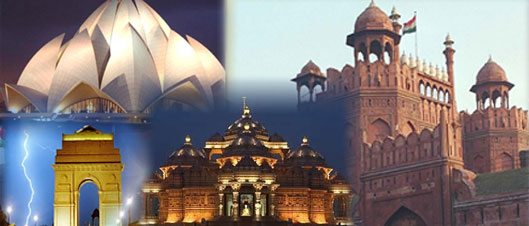
Delhi-Attractions‘Have we reached a Kuhnian moment in IR?’

(Peter Vale)

For nearly two decades now, the discipline of International Relations has lived on a lament: that it is Eurocentric and we need to de-westernise it. Every year, proponents of non-western IR make their pilgrimage  to the Mecca, the annual conference of International Studies Association (ISA) in the US or, once in a while, Canada, and talk endlessly of why we need to move beyond the West.

Occasionally precinct but mostly verbose, these are no comparison to the arrogance exhibited from the high and mighty. In a panel last year, when the leading IR figure, John Mearshimer was made aware of a whole groundswell of writings on non-Western IR, he said: ‘please ask these scholars to come to the ISA. I would like to listen to them’.

Was there ever a statement more revealing – cocky or innocent, take your pick – of the schism that lies between the mainstream and the margins in IR?


In the first half of January, some of us made the journey, metaphorically cutting right through the globe from the US, to New Delhi. The city was under a thick coat of smog. Pollution levels in Delhi had reached unprecedented levels and the government in Delhi was forced to take drastic measures, including adopting the odd-even rule for the first fortnight of January.

The sense of desperation outside could also be felt inside our conference hall, albeit the nature of the beast was different. A series of workshops – three in total – were organised by International Research on India and International Studies (IRIIS), World International Studies Committee (WISC) and Maulana Abul Kalam Azad Institute of Asian Studies (MAKAIAS) to rethink foundational assumptions of the discipline. It was a remarkably eclectic bunch of scholars from Latin America, Africa, Asia, Europe and North America discussing ways in which the discipline could be ontologically re-defined.

Interesting discussions followed. Hardly a consensus emerged, but it was interesting to see young scholars drawing from a wide range of philosophical sources from East Asia to Latin America. In a discipline, which makes a virtue of its reluctance (mostly stemming out of ignorance) of using non-European sources, this was a hopeful sign. Just last year I had found myself with a group of young scholars at ISA who advised me to tone down the postcolonial approach of my paper in favour of constructivism to make it ‘IR proper’. I had wondered then if almost three decades of interventions from postcolonial scholars was merely inconsequential head-banging. The Delhi Conference was reassuring that it was not.

Towards the end of this journey, my fellow traveller and an IR rebel of old standing, Peter Vale, asked me: have we reached a Kuhnian moment in IR? In his 40 years of struggle against orthodoxy from within the discipline, he seemed, for the first time, I suppose, alive to the possibility that the margins have arrived at the gates of the citadel of mainstream IR, ready to claim it. What a time to be in the discipline, I thought. Bring it on!

RHS Public History Workshop, Thursday 29 October

RHS Public History Workshop, Thursday 29 October

In association with the new RHS Public History Prize there will be a free Public History Workshop to be held on Thursday 29th October from 10am-5pm in the Wolfson suite at the Institute of Historical Research, Senate House, London.

Although it is a free event, space is (more…)

Call for papers–case studies, exemplary essays–on humanities’ disciplines ‘going public’

Extended deadline: Call for Papers generated by social media responses to an http://www.artsandhumanities.org blog – ‘The Humanities, The Public Intellectual and Human Flourishing’:

Call for Contributions – case studies, exemplary essays – on Humanities’ disciplines ‘going public’

(more…)

New Special Issue: Forum on Civic Engagement

AHHEcropSpecial Issue: Forum on Civic Engagement in the Arts and Humanities

Editorial: Donna Heiland & Mary Taylor Huber

Articles