
A&HHE Special Issue December 2016
On Land Agency: learning the Mallee
Vicki Reynolds
Adelaide College of the Arts
Abstract
My visual art exhibition Land Agency: learning the Mallee was the culmination of the research period that consisted of multiple journeys into the Murray Mallee area of southern Australia using various modes of travel, including motorcycle, kayak and walking. This essay is an account of this research period — of these multiple journeys and of the art that I produced during this time, with a particular focus on the practice of walking as journeying. I contrast my own practice and exegetical analysis with the methods of two other artist who use ‘walking’ in their artwork, Richard Long and Hamish Fulton. In conclusion, I reflect on my own art practice as a working model of practice as research functioning in the manner described by Deleuzes’s rhizome, the palimpsest of journey, data collecting and artworks as all interwoven and linked.
Keywords:
Visual art, walking, journeying, Land Agency, Richard Long, Hamish Fulton
This essay investigates the notion of practice as research through examining a visual arts project, Land Agency: learning the Mallee (Reynolds 2009), which I undertook between 1996 and 2011 and which promotes journeying as a way of learning the landscape. In order to learn the landscape, I undertook multiple journeys using various modes of travel, mainly motorcycle, kayak and walking, through the landscape of the Mallee, a biogeographic region of southern Australia spanning from western Victoria (the Mallee) through South Australia (Murray Mallee) to Western Australia (Mallee). These three areas lie at similar latitude and have a topography which is low and gently undulating, the climate is semi-arid, and the vegetation is extensively Eucalyptus mallee.
My studio practice operates as a concurrent journey. The journey or sequence of journeys in the landscape reflects and informs the processes of the studio: research is practice. During the project, I had the following aims: to establish journeying and site occupancy concurrently as an arts practice and as an inclusive way of seeing and learning the landscape; to establish my studio processes, including my collaborative practices, as a type of journey; to produce an exhibition of works that function as another journey and that demonstrate and promote land literacy; and to explore various methods of travel and established various modes of data collection as an integral part of my practice. This essay offers some remarks towards art practice and agency as a method of research, demonstrating how I undertook such research and reflecting upon the implications of doing so for artistic practice.
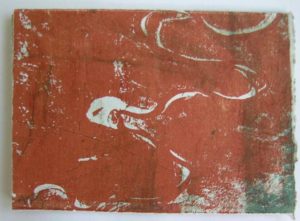
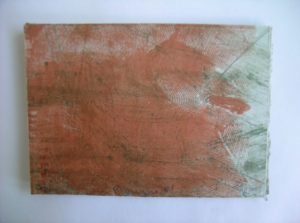
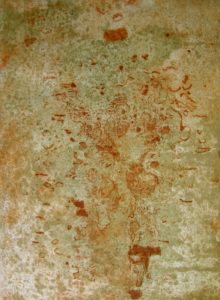
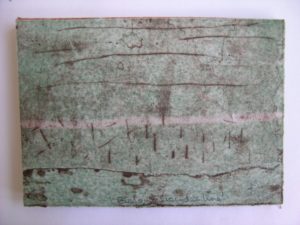
In this essay, I use two specific terms that warrant defining. ‘Land literacy’ refers to ‘the ability to read and appreciate the signs of health [and ill-health] in a landscape’ (Terry White, quoted in Norman, 2001, with added extra comment). The term emerged around the same time at a Greening Australia Conference (White, 1992). The term ‘land literacy’ has been adopted for use by the arts, in ‘naming what art and artists do when they are involved in the care of country, personally and didactically by means of their practice’ (Smith, 2001). The term ‘journey’ is a time-specific, inclusive, descriptive and structurally motivated device for my project. It is a journey or a sequence of individual journeys that inform and describe and, through reflexive activity, direct and redesign the studio processes. The journey as arts practice is the space where my body and mode of travel immerse me in a specific landscape. This experience informs my senses and unleashes multiple discourses. It may be physically demanding. It may be intellectually engaging. The creation of objects and images are optional outcomes of these walks, paddles or rides. The journey is the practice. The journey is a space in which to carry out research for future work based in the studio. The journey also refers to a diverse heritage of studio practices, theories, debates and modes of occupancy, and it may also include artistic collaborations. It is connected to identity and spirituality, data collection and vocation, to the past, and to future aspirations.
My intention was to learn the Mallee landscape to a depth that is greater than I could learn through one journey. A number of the journeys I made were recurring, performed over the same ground many times. These recurrences provided more time to learn the country in greater depth, through different seasons, weather, light, and times of day and night, as well as allowing me to observe other changes such as growth and death in the natural habitat. It also gave me time to see and know those changes brought by human construction and destruction in the landscape, such as road making, property delineation and fencing, and the cycles of agriculture and changes in crop plantings.
Remaking journeys provides the possibility of gathering much more data, which in turn offers a greater depth of learning and land literacy, as well as better opportunities to enlighten others about a landscape. The journey allows for a personal mapping of the landscape to take place, while remaking the journey confirms the personal place-naming and the marking of specific events. For example, ‘cable break dip’ is the place where the clutch cable on my motorcycle broke; ‘galahs sorry place’ is the place where I rode through a flock of galahs, colliding with one, causing its death, and feeling sorry not only for the bird but for its mate which waited by its body. Galahs mate for life and they can live for over 80 years.
Each mode of travel during the project investigated particular issues and concerns of the country. The amount of time spent or data collected does not devalue a shorter journey. It just differentiates it: single and repetitive journeys create different data. After reflecting on the travelling and data collection as well as collaboration, I then created the exhibition works that became Land Agency.
Walking
A Space exists when one takes into consideration vectors of direction, velocities, and time variables. Space is a practiced place (de Certeau, 1984: 27).
To understand journeying as it applies to the Land Agency project, I need first to describe my practice of walking and interpreting or experiencing as I walk. What follows is the narration of a practiced place, directly taken from my journal notes, describing one of my many walking journeys:
Leaving early, the morning light softly illuminating the dry grass and the ochre-coloured rocks. I begin the at-first gentle climb. My passage disturbs Euros, another name for the common wallaroo (Macropus robustus), picking the few succulent grasses. The sound of my footfalls muffled by the song of the pied butcher bird. The fragrance of individual plants and trees quite noticeable as I pass, but intermingled with the dry dust of the landscape. As the climb becomes steeper, my lungs begin to work harder, breathing becomes deeper. The clean coolness of the air gives a sense of breathing in the landscape, of it mixing with my blood and circulating throughout my body. My exhaling breath then dissipates into the landscape, my molecules exist forever in this space, on this ground. The air warms as the sun rises, flies woken by the warmth buzz around the perspiration on my face. The ground becomes rockier, vegetation more sparse, now low bushes amongst the yellow rocks. Breathing mimics footfall, a step a breath, the climb becomes near vertical, not much dirt and vegetation, mainly rocks and dust. Stopping to regain my breath allows a chance to take in the view, a wide expanse, big sky country. Red and yellow ochre coloured plains with blue-green saltbush, grasses and eucalypt.Through the heat haze stands a magnificent purple-blue cliff-buttressed mountain range and the clearest blue sky with only a wisp of cloud around. As my climb continues, the heat of the day begins to crowd my space. Breathing is laboured. My whole focus is on foot placement, heaving my body upwards. Each step that I take, inhale and exhale, my breaths becoming shorter, faster, taken with increasing difficulty. Perspiration begins to run into my eyes. The view is no longer important, the goal is to complete the climb. My brain only now acknowledges the occasional plant or rock marking. The totality of my being is focused on walking, climbing, breathing, wanting to stop, to be at the end of this climb, asking myself why I decided to undertake this peak. It is endless, the heat stifling, my mouth as dry as the rocks I’m climbing. Stopping now and then to regain breath, my legs are aching, knees groaning, backpack pulling on my shoulders and my back a mass of sweat where it rubs. Once, looking ahead, I’m fooled by a false summit, a crest, and I exhale at length when I reach its top, tricked by the landscape, because there is more to climb, onward, upward once again. When at last the top is reached, I stand, regaining my breath taking in a 360 degree spectacle. Then looking for a comfortable seat on the rocks, I remove my backpack, sit down and drink in the view as deeply as I drink my water.
- Journal notes from walk up Ngarri Mudlanha/St Mary Peak, 1170 metres high, and the second highest mountain in South Australia, October 2003.
After a journey, a journal record such as this, along with the ephemera and photographs, returns with me to the studio, to be combined with research material of a more scientific nature — identification of plant and animal species, geology, and so on, — along with historical and other information. In a sense, I see this gathering and combining of research as the beginning of the next leg of the journey.
There are a number of artists who have used the ‘walk’ as their artwork, in combination with gallery works and site-specific sculpture. Examining the methods of practice/research of two other such artists, Richard Long and Hamish Fulton, highlights the difference of approach in my own practice/research. Richard Long began his work at the time of the 1960s Monumental Land Art movement, with artists such as Michael Heizer, Robert Smithson, James Turrell, but his art-making methods are in opposition to the manner of production of these Land Artists. Instead of using large earth-moving equipment and carving the earth with them, or imposing imported materials into the space of the landscape, Long began his practice by just walking using a map and compass. He traced his walks onto maps, describing the lines and circles that he has completed by physically walking in the landscape. His practice gradually expanded to create ephemeral works, marking the landscape by walking repetitively to inscribe pathways, pouring water onto dry ground to create a drawing, and arranging rocks already present in the landscape, documenting the resulting circles or lines photographically and then disassembling the installation so that evidence of his work is no longer apparent and the land is returned to the condition in which he found it. As Long puts it,
there was a physical pleasure actually just doing the walk, spending a day walking across the moors following the compass point. … but it was also enjoyable because of the fact that I knew I was making a very original, a unique and dynamic work of art which had a new scale to it, which was a sculpture which was invisible and in many other ways was interesting as art. (Long, 1994)
After Long completes a walk, he creates text works, combining single adjectives together that describe the walk, or title the walk, or give further information such as distance, time span, and so on. Map works, which Long never refers to as drawings, describe the walk, using the language of western mapping, tracing the walk onto the map and thus creating the desired symbol, straight line, circle, spiral, or so on (Moure, 1998: 32-34). Long also uses repetitive walking as a tool when making a visual work at a specific site. By walking and re-walking over the space of the ground, he retraces his steps to create a path which becomes his mark in the landscape. He does this by tramping down vegetation or or scraping the ground clear with his boots,by moving obstacles and rocks to create a clear path, or, conversely, by placing objects, rocks, timber or water to create lines or circles in the landscape. After photo-documentation, Long may replace objects and deconstruct the work to remove most signs of the art work’s existence. Other works, such as drawing with water or clipping flower heads, are ephemeral in nature, and will over time disappear from the landscape (Long, 1994). In the gallery space, Long then mimics and recreates this movement of tracing and retracing steps, placing stones or sticks or drawing with mud and his hands in the gallery.
With an open, intuitive response to nature, and using his own human scale, Long makes sculptural works which emphasise the relative flatness of the ground — the ‘surface of the earth’ — and his own capacity to physically move through the landscape by walking. Using simple actions and gestures, and the elements of time, space, movement, distance and ideas, he has developed a unique artistic language that distills an experience of nature, while rejecting the pictorial conventions usually associated with landscape. Long creates and recreates the space of his practice. As Henri Lefebvre suggests, he is,
moving continually backward and forth between past and present. The historical and its consequences, the diachronic and the etymology of locations and the sense of what happened at a particular spot or place and thereby changed it — all this becomes inscribed space. The past has its traces; time has its own script. Yet this space is always now and formerly a present space, given as an immediate whole, complete with its associations and connections in their actuality. Thus the production process and product present themselves as two inseparable aspects, not as two separable ideas.(Lefebre, 1991: 37)
Lefebreve’s interpretation is consistent with Long’s statement on his website on walking. He explains ‘walking – as art – provided an ideal means for me to explore relationships between time, distance, geography and measurement’ (Long, nd).
Long strives for a minimalism in his work by paring down walks to lines or other symbols such as the circle and spiral, which are readily recognised throughout his body of work both imposed in the landscape and then reinterpreted in the gallery. Lucy Lippard discusses what she terms a gentle approach to making work in the landscape in comparison with that of many of his contemporaries in the 1960s. The American Earth Artist Robert Smithson, for example, used earth-moving equipment to reshape the earth, molding it into long term mammoth constructs such as Spiral Jetty. In contrast to Smithson, Long manages to tread imprints into the landscape, controlling it and refiguring the space. even if the traces are only obvious for a short space of time, such as marking an X in a field by decapitating daisies (Lippard, 1983: 52).
In Gendering Landscape Art, Anna Gruetzner Robins describes Long as ‘outwardly following the trajectory of a latter-day British explorer with echoes of the colonial impulse’ (Robins, 2000: 162), travelling to various places around the world (often nations that were once part of the old British Empire), making work and then returning to Britain. Robins describes this action as repetitive ‘dropping and marking’ (2002: 162) on the landscape. Conversely, Gloria Moure suggests that the body is the reference for Long’s work:
in the case of Richard Long … by virtue either of his almost initiatory walking, or the manual way in which he likes to shape his simple, expressive forms, or the meaning acquired in his works by the re-creation of the compositional premise (or condition) that defines us all, the body constitutes a reference as beloved as it is unavoidable. (1998: 32)
In my view, Long’s work is about himself: his physical ability, the space (dimensions) of his body in a natural landscape, and his sensory perceptions. He brings that sense back to the interior to show others. Long walks mostly by himself. He decides when to stop, start, when to make work in the field. The work is limited by the size of the materials he can physically move. The size of his feet determines the width of scraped lines. Similarly, in the interior space his hands and bare feet mark the walls and floor with mud. Long’s work is about time, but it is time in relation to his individual physicality, and about mapping and his ability to read and follow maps. R.H. Fuchs states that, ‘Long demonstrates that human beings are part of nature and can live in harmony with it — and realize their potential — only through understanding and reciprocity’ (1986, flyleaf).
In my view, Long demonstrates what he can do, by means of the personal journey, to gain an understanding of his personal space in the landscape. By mainly walking alone or perhaps with one other, he has no assistants or assistance. What he does by way of walking and making marks in the landscape is totally governed by the strength, size and ability of his body.
The British artist Hamish Fulton has also used walking as part of his art practice. As Fulton puts it, ‘The physical involvement of walking creates a receptiveness to the landscape. I walk on the land to be woven into nature’ (2005, 242). According to Wallis, Fulton’s maxim is, ‘no walk no work’ (Wallis, 2005: 129). Fulton is interested in the many layers of the walk; he mainly walks alone but has completed several group walks. He also duplicates walks. In the project ‘Walking through’, he wrote as he walked, recording details. On subsequent walks, he walked along a same route and might have recorded some of the same details, such as ‘red car at 9 o’clock’ (Fulton, 2002). In such moments, his walk vocabulary may contain references to the weather, time, his body, environmental concerns, or anything that he sees on the walk: cars, rocks, roadkill, and so on. Numbers are also important to him: the relationship between numbers of letters in words that link the walk, the numbers 4 and 7, appear repeatedly. All this is part of what Fulton calls ‘walking as a language’ (Fulton, 2002).
Fulton describes his work as a language, and the walk is in part a building of research. His research may include flora and fauna, cartographic, meteorological etc. He likes to undertake most of his additional research retrospectively, after the walk, as he believes too much information can destroy the spirit of the walk. Perhaps this removes any expectations that he might have about the weather or flora and fauna that he may or may not see. There is also post-walk/retrospective research. The resultant gallery work is a reduction of the rich experience of the walk and associated research (Fulton, 2002). There are no sculptures; instead, the photography and text objects are two-dimensional and framed for their exhibition in the gallery space.
In contrast to Richard Long’s work, Fulton’s work has moved to the more current issues of climate change and the environment. James Hall suggests that although Fulton is less interventionist in his work — in that he does not sculpt the landscape, and that he returns with only photographs — the resulting text and photographic gallery works are much more confrontational. Hence, the reference to issues of environment. Fulton aims to ‘leave no trace’. He has said, ‘The single most important issue of our times is the condition of the planet’ (2002).
Comparing and contrasting artists Richard Long and Hamish Fulton enables me to evaluate differences in my own walking practice. In contrast to Fulton, I research before the walk as well as after. When I walk, I carry maps, camera and collecting containers. I seek out topographical and other maps and information about flora and fauna, terrain and history. I do not expect to tick off sightings on a list, but I seek a greater understanding of what I might see on my trip. Data collecting while walking involves taking digital photographs of all manner of things: vistas as well as macro imagery of the ground, flowers, and textures. Collected objects might include feathers, seedpods, rocks and ephemera. The walk is not about my body in the landscape as it is with Richard Long. Rather, the walk is a means for collecting data, the data collected being influenced by the experience of the walk, which is influenced by the country and the weather. This, in turn, influences the subsequent data collection.
In Material Thinking, Preliminary Matters, Paul Carter explains that what he terms ‘material thinking’ is not detaching the artwork from the permutations of its production. Carter states that practice is ‘articulated, jointed or joined together in a variety of ways and dimensions … it is a symbolic representation of the phenomenal, a picture of the way the world is constructed that participates in complexity rather than eliminates it’. (Carter, 2004: p. xxii)
Each time I reflect upon a journey it informs the next journey and the subsequent reflection. I can travel through a landscape by walking alongside a river collecting data but when I put my kayak on the same river and travel on the water my point of view and the type of data is specific. It is the performance of moving through a space which I have prescribed, using various means or techniques (some studio-based), through reflection of previous journeys: a movement from A to B and often back again.
Paul Carter discusses the symbolic function of a work of art and how its meaning can be over- or under-interpreted because the artwork is separated from the matrix of its production (Carter, 2004: xi). When the journey is the artwork, the meaning of the work is not detached from the matrix of its production, not unlike threads woven into the fabric. These threads have multiple entry points. They are the tracks of my travel: walking, motorcycling, paddling or the journey of my printing plate through its processes in the studio. Data collecting is another thread throughout the fabric of my praxis integral to my chosen methods of learning of the landscape.
My methodological structure is not unlike the structure of the Mallee lignotuber. It is rhizomic, in the sense that it is concurrently the journey and the studio work. The landscape acts as the agent for research and artworks that are both objects and journey. The characteristics of a rhizome mean that it can connect any point to any point in its search for nourishment. It may include traits of different natures and regimes, as Deleuze and Guattari describe: ‘the rhizome pertains to a map that must be produced, constructed, a map that is always detachable, connectable, reversible, modifiable and has multiple entryways and exits and its own lines of flight’ (Deleuze, 1987: 36).
Conclusion
I see my own art practice as a working model of practice as research functioning in the manner described by Deleuzes’s rhizome, the palimpsest of journey, data collecting and artworks as all interwoven and linked; any one cannot exist without the other. Lines of flight may be through examination of a new method or area of research.
One result of this praxis is a means of becoming, finding myself in a particular space in the land and achieving a new agency in this space. Another is the exhibition as a means of bringing the journey to the viewer. The visitor to the gallery may experience his/her own journey by walking the path created by viewing the works.
References
Carter P (2004) Material Thinking. Melbourne: Melbourne UP,2004.
Deleuze, G and Guattari F, trans. Massumi. B (1987) A Thousand Plateaus: Capitalisation and Schizophrenia. Minneapolis: University of Minnesota Press.
de Certeau M (1984) The Practice of Everyday Life. Oakland: University of California Press.
Fuchs RH (1986) Richard Long. London: Thames and Hudson.
Fulton H (2002) Artist Talk. In: Hamish Fulton: Artist Journey. Tate Britain. Available at: http://www.tate.org.uk/whats-on/tate-britain/exhibition/hamish-fulton-walking-journey (accessed 5 June 2009).
Fulton H (2005) Artist statement. In: Kastner J and Wallis B (eds) Land and Environmental Art. London: Phaidon, pp. 242-43.
Harvey D (1991) Afterword. In: Lefebvre H. The Production of Space. Paris: Editions Anthropos, pp. 425-43.
Lefebvre H (1991) The Production of Space. Oxford: Blackwell.
Lippard L (1983) Overlay. New York: Pantheon.
Long R (1994) Stones Clay Water. Sydney: Museum Contemporary Art.
Long R (nd) , Richard Long (artist website). Available at: http://www.richardlong.org/index.html (accessed 20 May 2009).
Moure G (1998) Richard Long Spanish Stones. Barcelona: Ediciones Poligrafa.
Reynolds V (2009) Land Agency. Visual art exhibition Light Square Gallery (Adelaide, South Australia) and Nextart Gallery (Lismore, NSW).
Gruetzner Robins A (2000). ‘Ain’t Going Nowhere’: Richard Long: Global Explorer. In: Adams S and Gruetzner Robins A (eds). Gendering Landscape Art. Manchester: Manchester University Press, pp. 162-72.
Wallis B (2005) Survey. In: Kastner J and Wallis B (eds) Land and Environmental Art. London: Phaidon, 2005, pp.18-43.